
Erosion Control Retaining Walls Houston, TX
Prevent Soil Loss on Steep Slopes
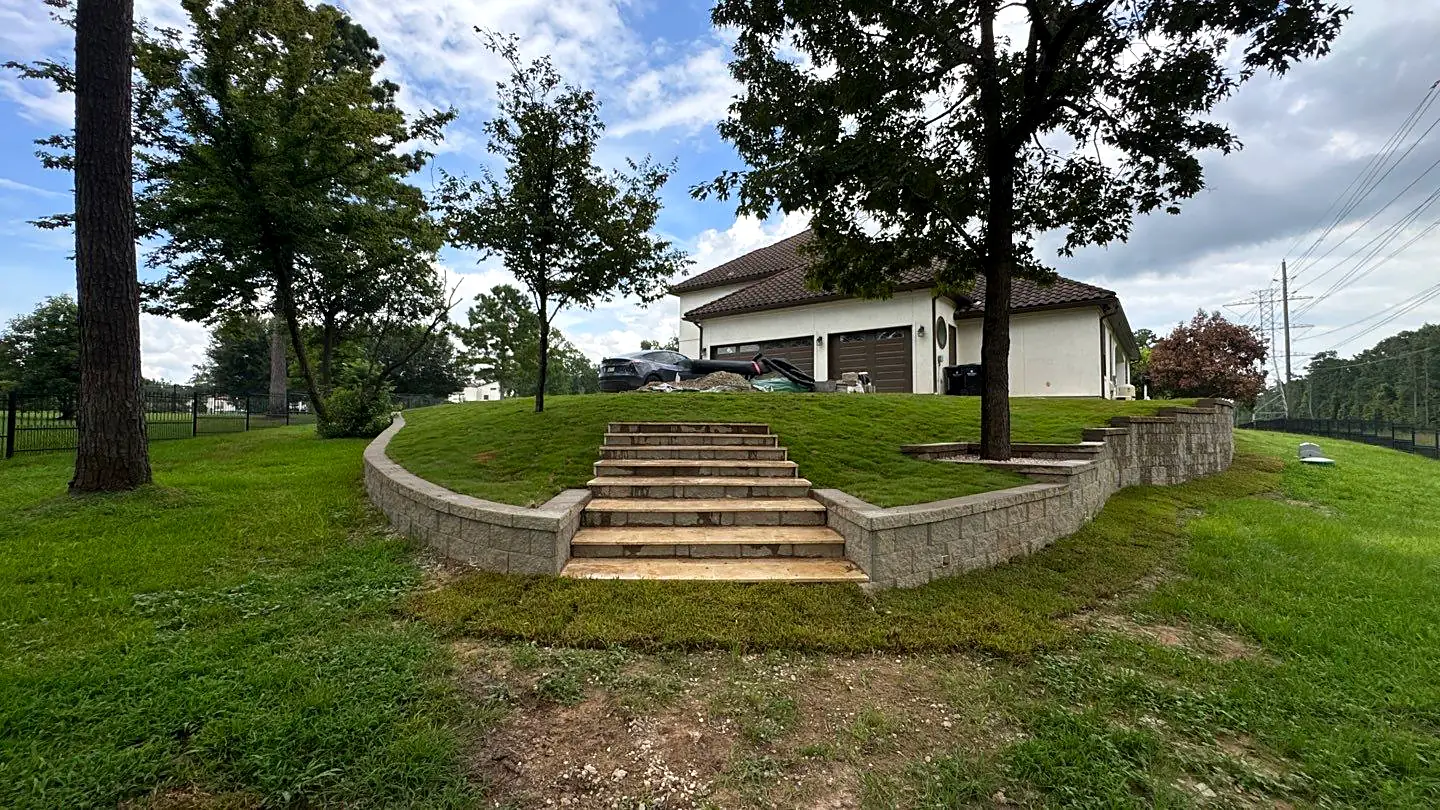
ErosionSoil carried away by moving water, often seen as bare channels, exposed roots or sediment on paving. control Retaining wallA wall built to hold back soil where the ground level changes. in Houston are built for lots that are losing ground: backyards that drop toward a bayou or creek, slopes above a detention pond, side yards where every storm cuts a deeper channel, and banks where fence posts now hang over open air. The goal is to stop the soil loss for good, which takes more than a wall on its own.
Erosion is a water problem first. We slow and redirect the water that is doing the cutting, then use walls, rock, and planting to hold what is left in place. That combination is why this work sits between our erosion control drainage service and our wall work as a retaining wall contractor in Houston.
What's under it · tap a layer
Wall block cap. A wall built to hold back soil where the ground changes level. A wall that can't drain will eventually move.
01
Signs Your Slope Needs an Erosion Control Retaining Wall
Erosion moves slowly until a big storm, then it moves fast. These are the signs that the soil is leaving faster than grass and roots can hold it.
Banks along bayous and creeks are the most urgent, because a bank that is undercut at the bottom can slump a large section of yard in a single event.
- Tree roots exposed on a slope that used to be covered
- Fence posts or a deck leaning toward the low side
- Small channels or gullies forming after each rain
- Fans of sediment on the patio, lawn, or in the pond below
- Cracks in the soil near the top of a bank
- A bank face that is steep, bare, or slumping
02
How Erosion Control Retaining Walls Work
A slope erodes when water moves across it faster than the soil can hold together. Expansive clayClay soil that swells when wet and shrinks when dry. Much of the Houston area sits on it, and it affects foundations, paving and drainage design. In practice: Keeping soil moisture around a slab foundation steady, without ponding or bone-dry spells, is part of good drainage design here. is sticky when wet, but once the surface is broken it washes easily, and in sandy pockets near creeks it can wash out from beneath.
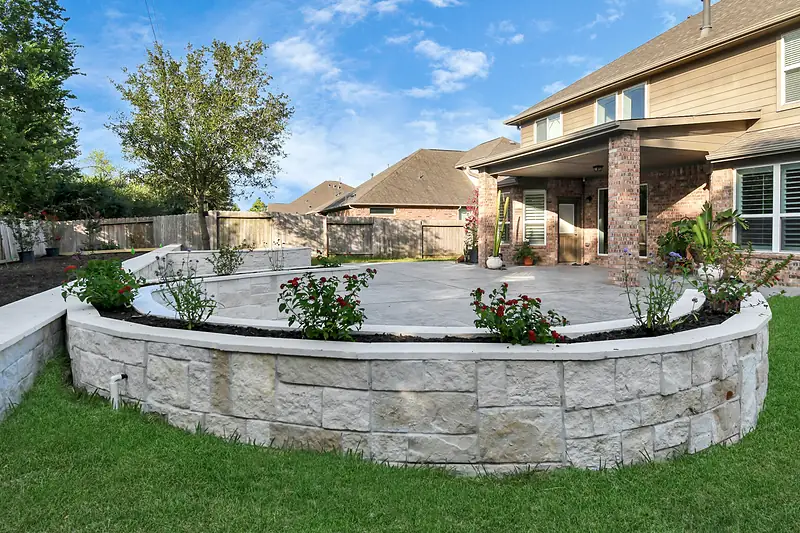
The fix works in layers. First, surface water from roofs and lawns is collected and piped past the slope instead of over it. Second, the slope is shortened with terraced walls so no single face is too tall or too steep. Third, the toe of the slope, where water is most aggressive, gets rock or a buried wall base that cannot be undercut. Last, the terraces are planted with deep-rooted groundcover and shrubs that hold the surface between walls.
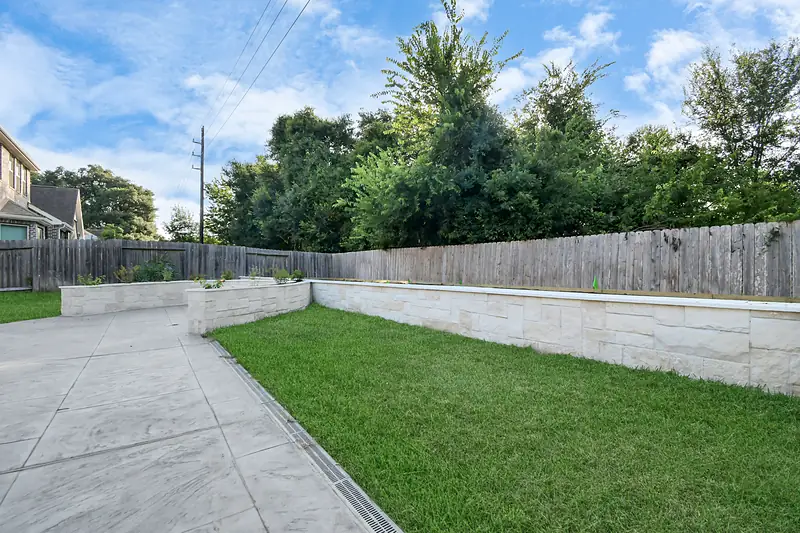
Several shorter walls are usually easier to build, more stable, and less likely to need permits than one tall wall. Where a single taller wall is the right answer, it is built with GeogridA plastic mesh laid in layers behind a retaining wall and buried in the backfill to tie the soil mass to the wall. and follows stamped plans from a licensed P.E. when required.
03
Our Erosion Control Wall Process
Slopes near water bring extra checks, so the early steps take longer than on a typical yard wall.
- Site study: a Home Scout walks the slope, follows the water during or after rain where possible, and marks the property line and any EasementA strip of the property that someone else, often a utility or drainage district, has rights to use. Building permanent structures in an easement is usually restricted. In practice: Many Houston lots have a rear utility easement. Check the survey before placing a pergola or outdoor kitchen near the back fence..
- Approvals: if the slope is in a drainage or flood control easement, we confirm what permission is needed before any work in that strip.
- Water first: gutters, downspouts, and yard drains are routed so roof and lawn water bypass the slope in solid pipe.
- Grading: the slope is cut and benched into terraces, with careful access for equipment on soft ground.
- Walls and toe: walls are built on compacted stone bases with drainage behind them, and the toe is armored with rock where water reaches it.
- Planting: terraces get soil, fabric where needed, and deep-rooted plants, then MulchA layer of organic or mineral material spread over soil to hold moisture, moderate soil temperature and suppress weeds. In practice: In heavy rain, light mulch can float and wash onto paving. Placement and edging should account for water flow. and temporary watering.
04
Wall and Slope Materials for Erosion Control
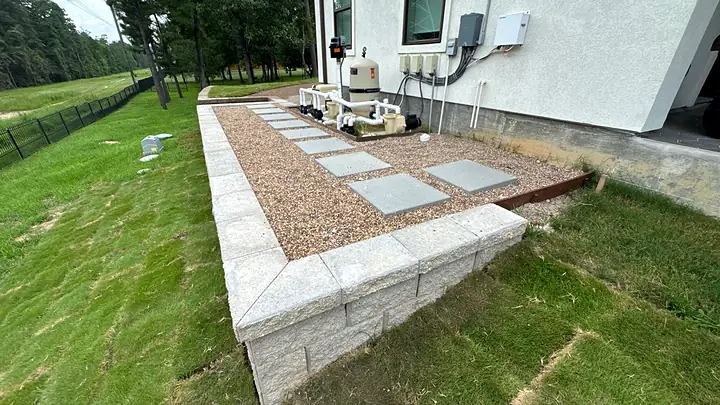
Belgard segmental block is our usual choice for terraces because it stacks without mortar, flexes with moving soil, and drains through its gravel-filled cores. Natural stone and large boulders work well along creek banks where a softer look fits the setting.
At the bottom of a slope near water, angular rock placed over filter fabric resists scour better than smooth river rock. Between walls, erosion control blanket made from natural fiber holds the soil while plants root in. Plant choices lean toward natives and adapted species with deep roots that tolerate both flooding and drought.
05
Erosion Control Retaining Wall Cost Factors
These projects vary widely because access and soil conditions vary widely. A backyard slope with a side gate and firm ground is very different from a creek bank where materials have to be carried down by hand.
Cost depends on the length and height of the slope, how many terraces it needs, how much soil has to be brought in to rebuild lost ground, rock at the toe, drainage piping to carry water past the slope, planting, and any permits or P.E. plans. The ballpark price tool gives an early range, and financing is available for qualifying projects from $5,000 to $250,000, with approval not guaranteed.
06
What Fails on Erosion Projects
The most common failure is building a wall without fixing the water. If a downspout or a neighbor's yard still sends water over the top of the slope, it will find the end of the wall and cut around it.
We also see walls set on soft fill with no compacted base, toes left exposed to scour, broken concrete dumped down a bank as riprap, and slopes cleared of every plant and left bare during construction. Bare clay on a slope can lose inches in one heavy storm, so we stage work to keep the surface covered as much as possible.
07
Pairs Well with Erosion Control Walls
Most erosion projects start with surface water drainage that catches sheet flow before it reaches the slope, and downspout rerouting that sends roof water into solid pipe.
Major reshaping is part of excavation and grading, and the finished terraces are planted through landscape installation. Because one team handles all of it, the drainage, walls, and planting are built as one system.
08
Why Texas Urban Elements for Slope Stabilization
We are NDS Certified drainage specialists and a Belgard Authorized Contractor, which covers the water and the walls on an erosion project. A Home Scout visits every property before a proposal is written, and the proposal is itemized with our price-what-we-quote guarantee.
Drainage work carries our Drainage Performance Guarantee, and walls carry our structural warranty on hardscape. We have worked on Houston lots since 2016, from The Woodlands and Spring to Memorial and Sugar Land.
Erosion Control Retaining Walls Questions
Can I build a retaining wall along a bayou or creek?
Sometimes, but check first. The strip along many bayous, creeks, and channels sits in a drainage or flood control easement held by a public agency, and work there typically needs written permission. Your survey shows easements. We confirm what applies during the site study and design the wall to stay on your side of any line we cannot build across.
Is a retaining wall or rock better for erosion?
Often the answer is both. Rock at the toe of a slope resists scouring water, while terraced walls shorten a tall slope into stable steps. On gentle slopes, grading, drainage, and planting alone may be enough. We match the method to how steep the slope is, how much water reaches it, and how much usable yard you want back.
Why is my yard washing away after every storm?
Usually because concentrated water is crossing it. A downspout, a neighbor's runoff, or a low path across the lawn channels rain into one stream that cuts through soil. Houston storms can drop several inches an hour, so that stream gets strong fast. Catching the water before the slope is the first step in stopping the loss.
Will plants alone stop erosion on my slope?
On a gentle slope with controlled water, yes, deep-rooted groundcover and shrubs can hold the surface. On steep banks or slopes where water concentrates, plants struggle to establish before the next storm washes them out. Walls and rock give the plants a stable surface to root into, and the plants protect the soil between walls.
Related Services in Houston
- Erosion Control Houston
Grading, swales, rock, and planting that stop soil from washing out of beds, slopes, and bayou-edge yards.
- Land Drainage Installation Houston
Full-property drainage assessments and system installation for large lots, new builds, and problem properties.
- Retaining Wall Installation Houston
New retaining walls built with proper batter, base embedment, and drainage aggregate for Houston's expansive clay.
- Stone Retaining Walls Houston
Natural and manufactured stone walls that hold slopes while adding a finished, permanent look to the landscape.
- Block Retaining Walls Houston
Segmental block walls with geogrid reinforcement for Houston properties that need structural holding capacity.
- Retaining Wall Repair Houston
Assessment and correction of leaning, cracking, or bulging retaining walls before full failure occurs.
Erosion Control Retaining Walls is part of our Retaining Wall Contractor Houston services. Texas Urban Elements is a Houston landscape designer that designs and builds every part of the yard.
Need an Assessment?
We assess your yard and provide a permanent solution. Professional project consultation. A Home Scout personally visits every property.
What you get
- A Home Scout on siteA trained scout walks and measures every property before a proposal is written.
- Itemized written proposalPriced line by line, and we price what we quote.
- One team, every tradeNo subcontractor hand-offs between drainage, base and finish.
- 72-hour walkthroughWe come back after completion to check the work with you.
- Backed by guaranteesDrainage Performance Guarantee and a structural warranty on hardscape.
Texas Urban Elements job photos
Erosion Control Retaining Walls jobs in Houston
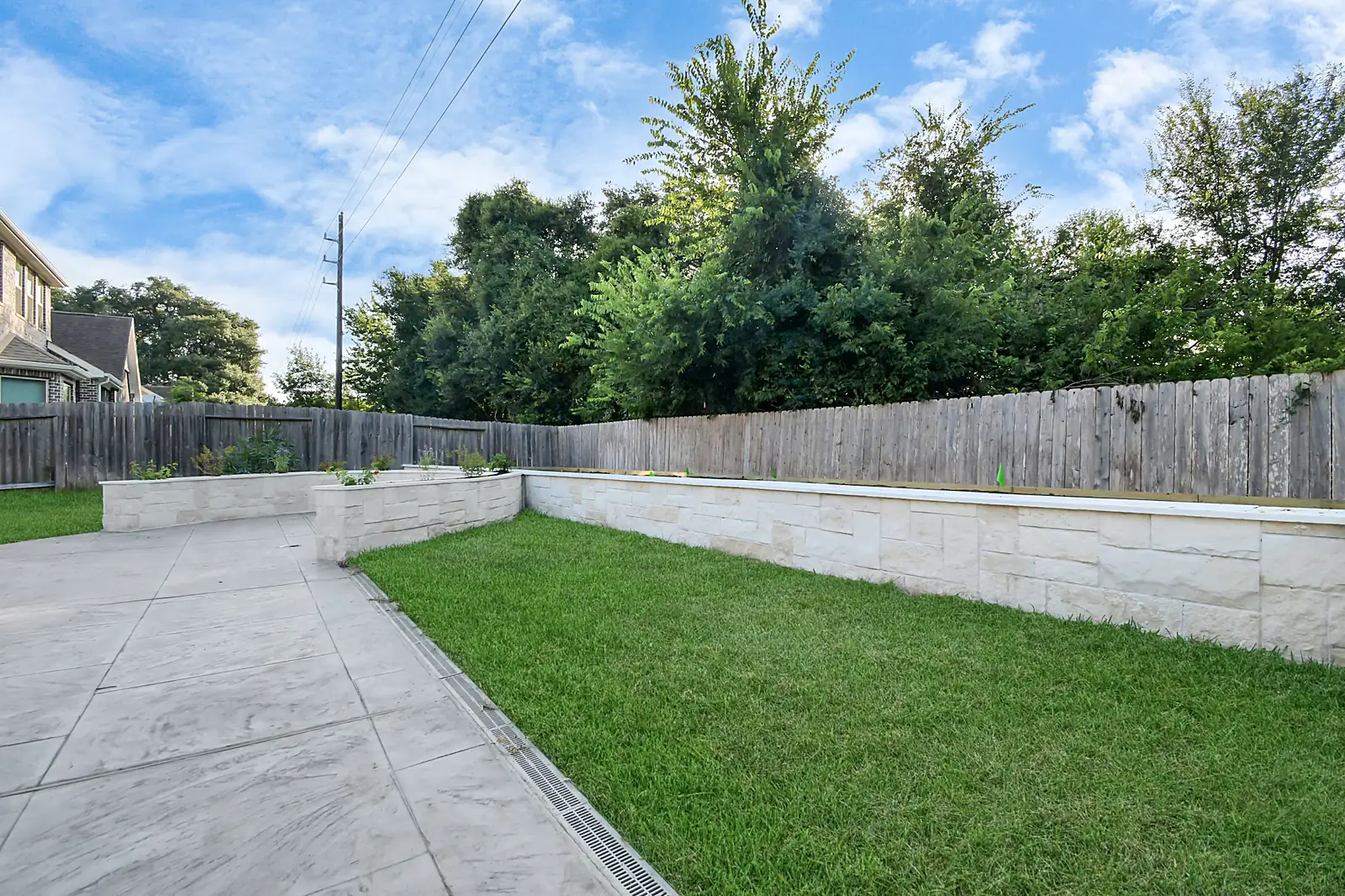
Photos from our own projects, edited for the web. Tap a thumbnail to see it larger.
Let's Get Started
Don't wait until the problem gets worse. Schedule your professional project consultation today.
For a full overview of retaining wall contractor options in Houston, see our Retaining Wall Contractor Houston page.