
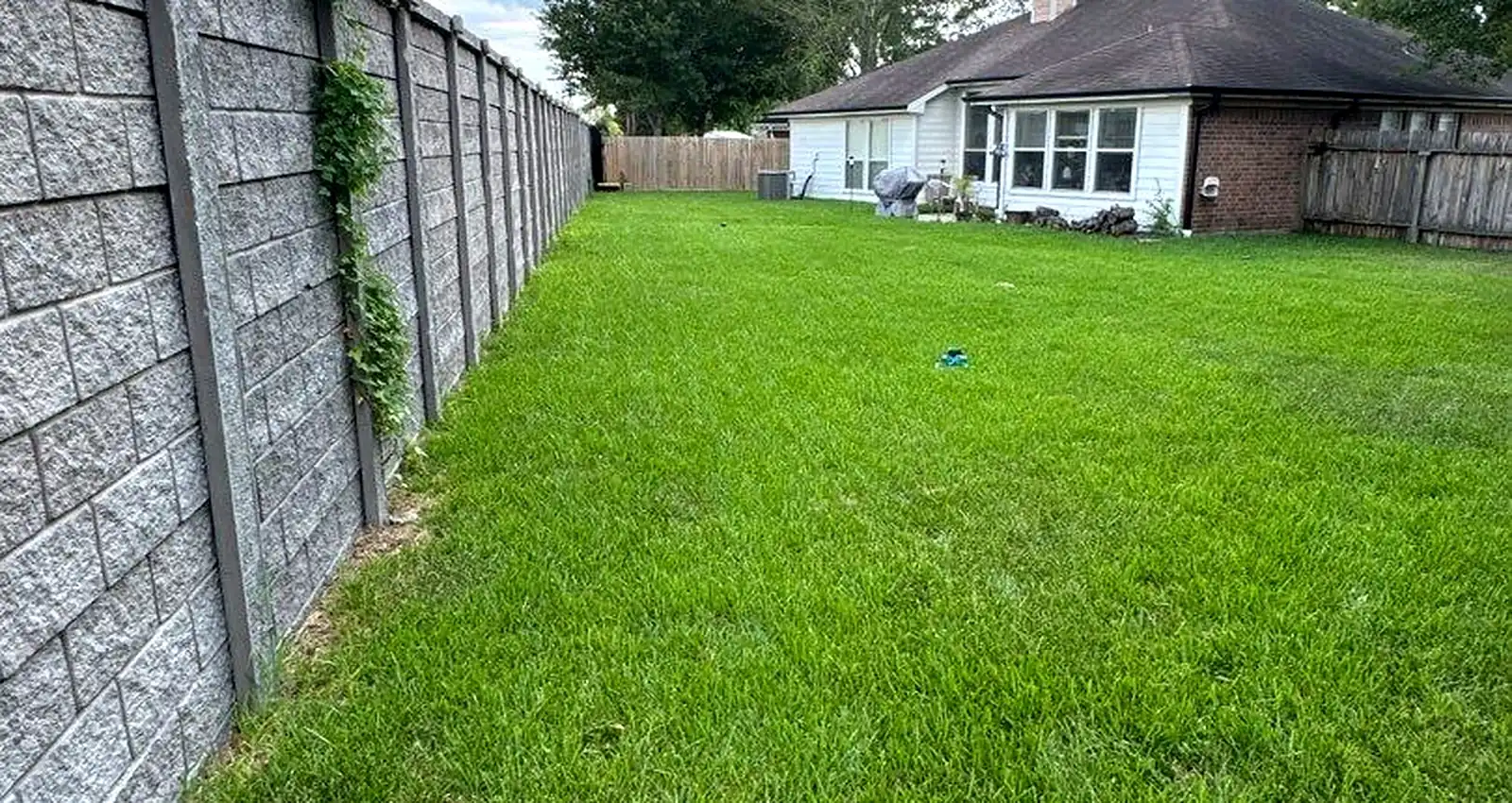
Excavation and grading in Houston is the site prep that every drain, slab, patio, and lawn depends on. Grading sets the slope that tells water where to go. Excavation removes soil to the right depth for a base or a pipe. If either one is off, the work built on top inherits the problem: a patio that holds water, a drain without fall, a lawn that never dries.
Grading here takes more care than in most places because the margins are so small. Many lots have only inches of fall from the back fence to the street, and Houston's Expansive clayClay soil that swells when wet and shrinks when dry. Much of the Houston area sits on it, and it affects foundations, paving and drainage design. In practice: Keeping soil moisture around a slab foundation steady, without ponding or bone-dry spells, is part of good drainage design here. moves with moisture. This page covers how we cut, fill, and finish grade a property so water moves away from the house.
What's under it · tap a layer
Sod. Living turf over amended topsoil, graded so rain runs off toward an outlet instead of sitting on the clay.
01
When You Need Excavation and Grading
Grading is the right fix when water sits because of the shape of the ground. Signs include a yard that slopes toward the house, low spots that hold water across the lawn, soil built up against the brick until the slab edge is buried, and builder grades that have settled since the house was new.
Excavation comes before any new construction: a patio, driveway, pool deck, walkway, wall, or drainage system. Each needs existing soil removed to a set depth and a firm, level SubgradeThe native soil beneath a paving or structure after it has been excavated and prepared. In practice: Houston clay subgrades move with moisture changes, which is why base preparation and drainage underneath matter. before base material goes in. It is also needed when old concrete, failed pavers, or roots have to come out before the next phase begins.
02
How Grading Works in Houston Clay
The basic goal is Positive drainageGrading the ground so water always moves away from the house and other structures toward a safe outlet. In practice: The first question on any Houston site visit: does the ground fall away from the slab on every side?: ground that falls away from the foundation on every side, then carries water to SwaleA shallow, gently sloped channel in the ground, often grassed, that guides surface water toward an outlet. In practice: Side-yard swales between houses are common on Houston lots and are easily blocked by fences, beds or fill., drains, or the street. Building codes commonly call for several inches of fall within the first 10 feet from a foundation. On tight Houston lots that is not always possible, so drains and swales pick up where grading leaves off.
Clay changes the approach. It swells when wet and shrinks when dry, so loosely placed fill settles and changes shape. We place fill in thin lifts and compact each one rather than dumping it all at once. We also keep finish grade below the brick Weep holeA small opening near the base of a wall that lets trapped water escape. In practice: A retaining wall that cannot drain is a wall that will eventually move. TUE details always show how water leaves the back of the wall. and slab edge, so soil does not trap moisture against the house.
03
Our Excavation and Grading Process
The grade we set becomes the reference for everything after it, so we check it at every stage.
- Site visit to measure existing grades and see where water goes today.
- Grade plan showing target elevations, cut and fill areas, and how water leaves the lot.
- 811 utility locates, plus marking of irrigation, lighting, and other private lines.
- Tree protection, keeping heavy equipment out of the root zones of live oaks and other trees you are keeping.
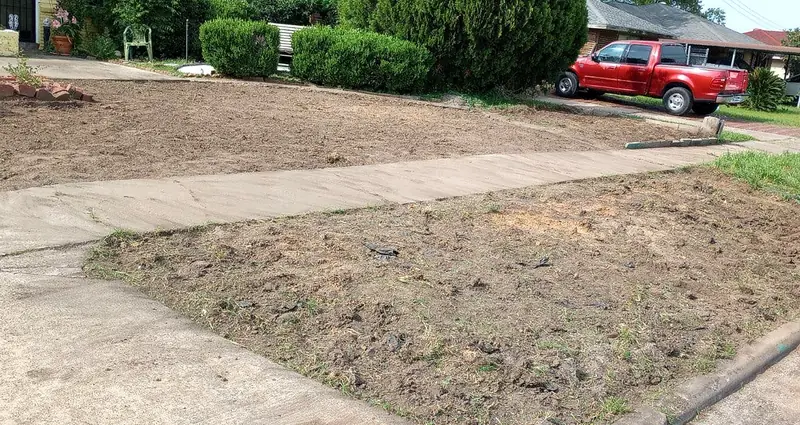
- Strip sod and remove topsoil from areas being cut or filled.
- Cut high areas and fill low ones, compacting fill in lifts and checking elevations with a laser level.
- Finish grade with topsoil, shape swales, and prepare the surface for sod, beds, or base material.
04
Grading Materials, Equipment, and Options
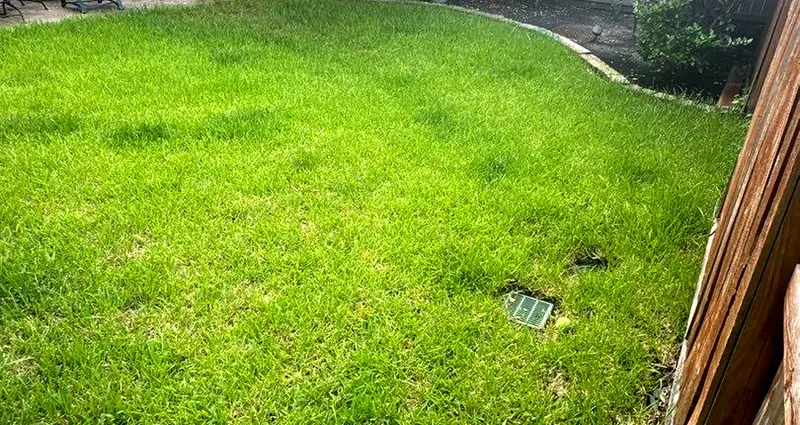
The right fill depends on what goes on top. Under lawn, clean topsoil or sandy loam over a compacted subgrade gives grass a good root zone. Under a patio or driveway, the subgrade is compacted clay or select fill, followed by the base material that surface calls for. Excess clay from cuts is often hauled off rather than reused, because it is hard to work and holds water.
Equipment depends on access. Compact track loaders and mini excavators handle most yards, but many Houston backyards are reached only through a side yard a few feet wide, which can mean smaller machines or hand work. Laser levels let us set and check grade precisely across the whole area, which is what flat lots need.
05
Excavation and Grading Cost Factors
The volume of soil moved is the starting point: how much is cut, how much fill is imported, and how much is hauled away. Access, demolition of old concrete or pavers, tree protection, and the finished surface all add up. Wet weather can push schedules, because saturated clay cannot be compacted properly.
Permits may apply for larger grade changes or work in an EasementA strip of the property that someone else, often a utility or drainage district, has rights to use. Building permanent structures in an easement is usually restricted. In practice: Many Houston lots have a rear utility easement. Check the survey before placing a pergola or outdoor kitchen near the back fence., and HOAs may want to review changes that affect neighbors' drainage. Use our ballpark price tool for a starting range.
06
Grading Mistakes We Correct
Topsoil piled against the house to create a slope is one of the most common problems. It buries the slab edge and weep holes, invites moisture and pests, and often still slopes the wrong way a few feet out. Other mistakes: fill dumped without CompactionMechanically pressing soil or aggregate to make it dense and stable so it does not settle later., which settles into new low spots; grading that sends water into a neighbor's yard; and sod laid before anyone checked the grade.
We also see patios and walks poured on uncompacted clay that has since moved. Getting the grade and subgrade right before any surface goes down is the cheapest way to avoid tearing it out later.
07
Work That Follows Grading
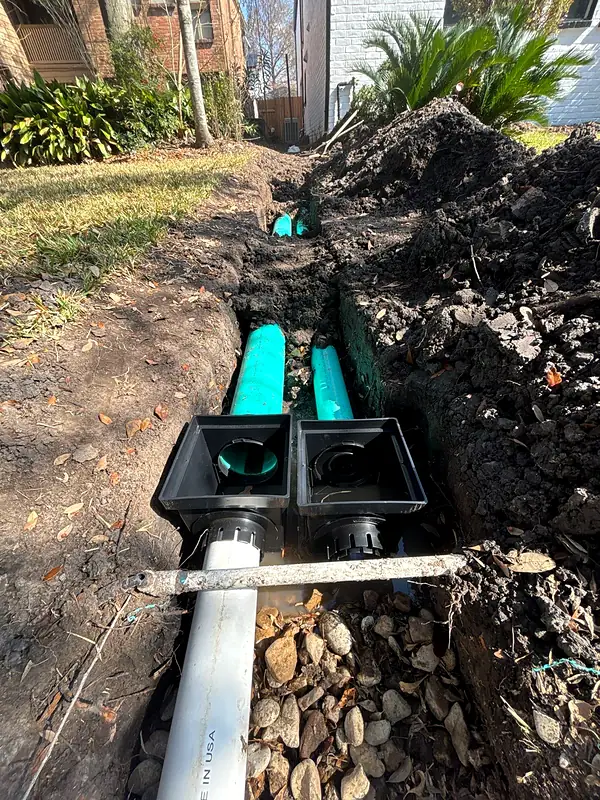
Grading is usually the first phase. Drainage comes next: French drain installation and catch basin installation where water still collects. Lawns get lawn grading and leveling and new sod, and hard surfaces such as patio paver installation start on the subgrade we prepare. On larger properties, grading is part of land drainage installation. It all sits within our drainage service in Houston.
08
Why Texas Urban Elements
The crew that prepares the base finishes the surface. One team handles grading, drainage, concrete, pavers, and planting, so the grade we set is the grade the next phase builds on, with no hand-offs. A Home Scout visits every property before a proposal is written, and our design work includes a drainage and grade plan. Proposals are itemized under our price-what-we-quote guarantee, and hardscape we build carries our structural warranty.
Excavation and Grading Questions
How much slope does a yard need to drain?
Ground next to the house should fall away clearly, and building codes commonly reference several inches of fall within the first 10 feet. Across the rest of the yard, gentle and continuous fall toward a swale, drain, or the street matters more than steepness. On very flat Houston lots, grading is often paired with drains to make up for limited fall.
What is the difference between grading and leveling?
Grading shapes the ground so water flows where you want it, which means it is intentionally not level. Leveling smooths out bumps, ruts, and dips in a lawn so it is even to walk on and mow. Most yards need both: a graded overall shape with a smooth surface on top that feels level underfoot.
Do I need a permit for grading in Houston?
Small residential regrading often does not, but it depends on the city, the amount of soil moved, and whether the work touches an easement or floodplain. Houston, Bellaire, and West University Place each have their own permit offices, and HOAs may want to review changes that affect drainage. We check requirements during planning.
Can you grade around a live oak?
Yes, with care. Live oaks have wide, shallow root systems, and cutting roots or piling fill over them can stress or kill the tree. We keep heavy equipment out of the root zone where possible, avoid adding fill over roots, and adjust the grade plan around the trees you want to keep.
What happens to the extra dirt from excavation?
Usable topsoil is often set aside and reused for finish grading. Excess clay is usually hauled off, because it is hard to spread evenly, holds water, and makes a poor root zone for sod. Hauling is part of the scope, so the volume of spoils and the access for trucks are both factored into your itemized proposal.
Related Services in Houston
- Lawn Grading & Leveling Houston
Professional yard grading and leveling to prevent standing water and improve usability.
- Driveway Replacement Houston
Tear-out of a cracked or settled driveway and a new one built on a rebuilt base in concrete or pavers.
- Patio Paver Installation Houston
Paver patios set on a compacted base with proper pitch, edge restraint, and polymeric joint sand.
- French Drain Installation Houston
Subsurface perforated pipe system that intercepts groundwater and moves it away from your foundation permanently.
- Yard Drainage Solutions Houston
Custom drainage plans for Houston properties with standing water, soggy lawns, or chronic flooding issues.
- Surface Water Drainage Houston
Channel drains, catch basins, and swale systems that capture and redirect sheet flow across flat Houston lots.
Excavation and Grading is part of our Drainage Service Houston services. Texas Urban Elements is a landscape designer Houston TX that designs and builds every part of the yard.
Need an Assessment?
We assess your yard and provide a permanent solution. Professional project consultation. A Home Scout personally visits every property.
What you get
- A Home Scout on siteA trained scout walks and measures every property before a proposal is written.
- Itemized written proposalPriced line by line, and we price what we quote.
- One team, every tradeNo subcontractor hand-offs between drainage, base and finish.
- 72-hour walkthroughWe come back after completion to check the work with you.
- Backed by guaranteesDrainage Performance Guarantee and a structural warranty on hardscape.
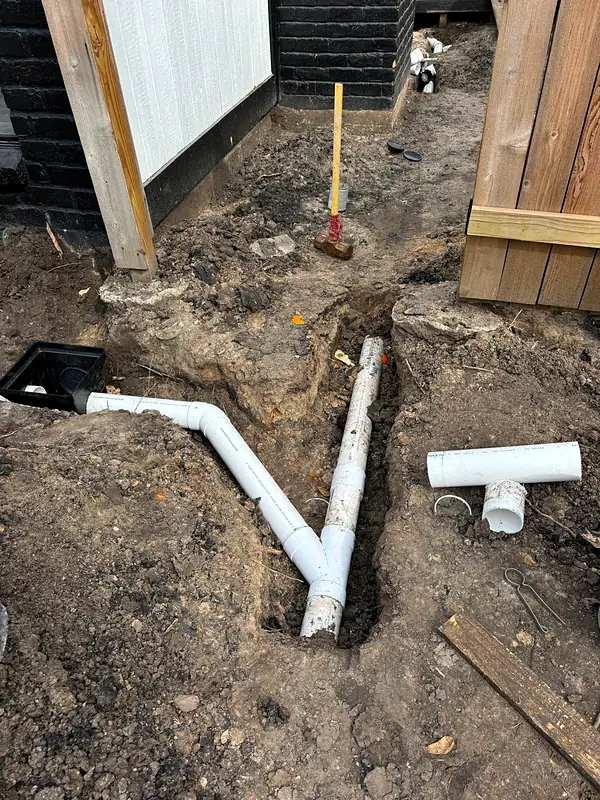
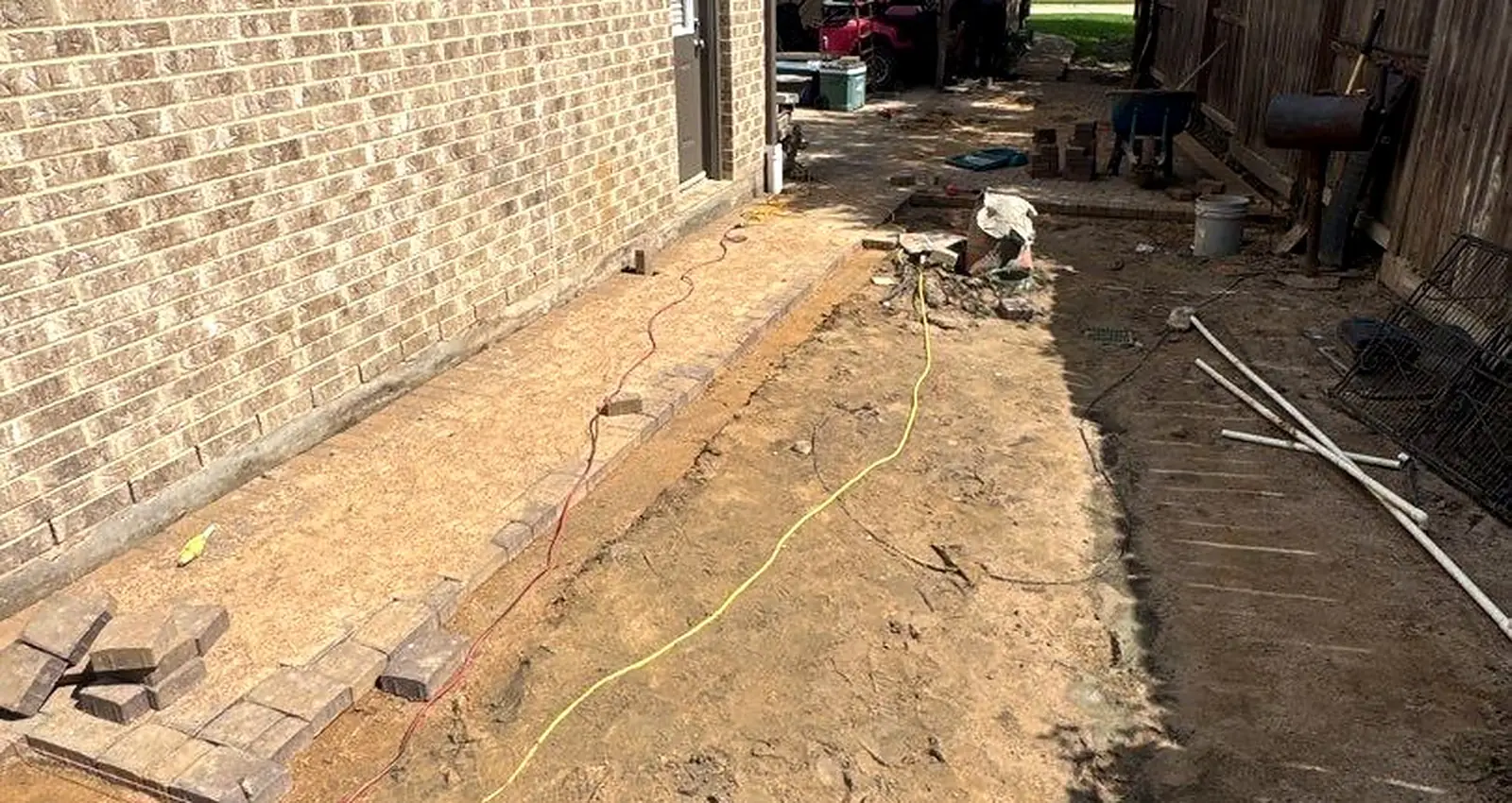
Texas Urban Elements job photos
Excavation and Grading jobs in Houston
Photos from our own projects, edited for the web. Tap a thumbnail to see it larger.
Let's Get Started
Don't wait until the problem gets worse. Schedule your professional project consultation today.
For a full overview of drainage service options in Houston, see our Drainage Service Houston page.