
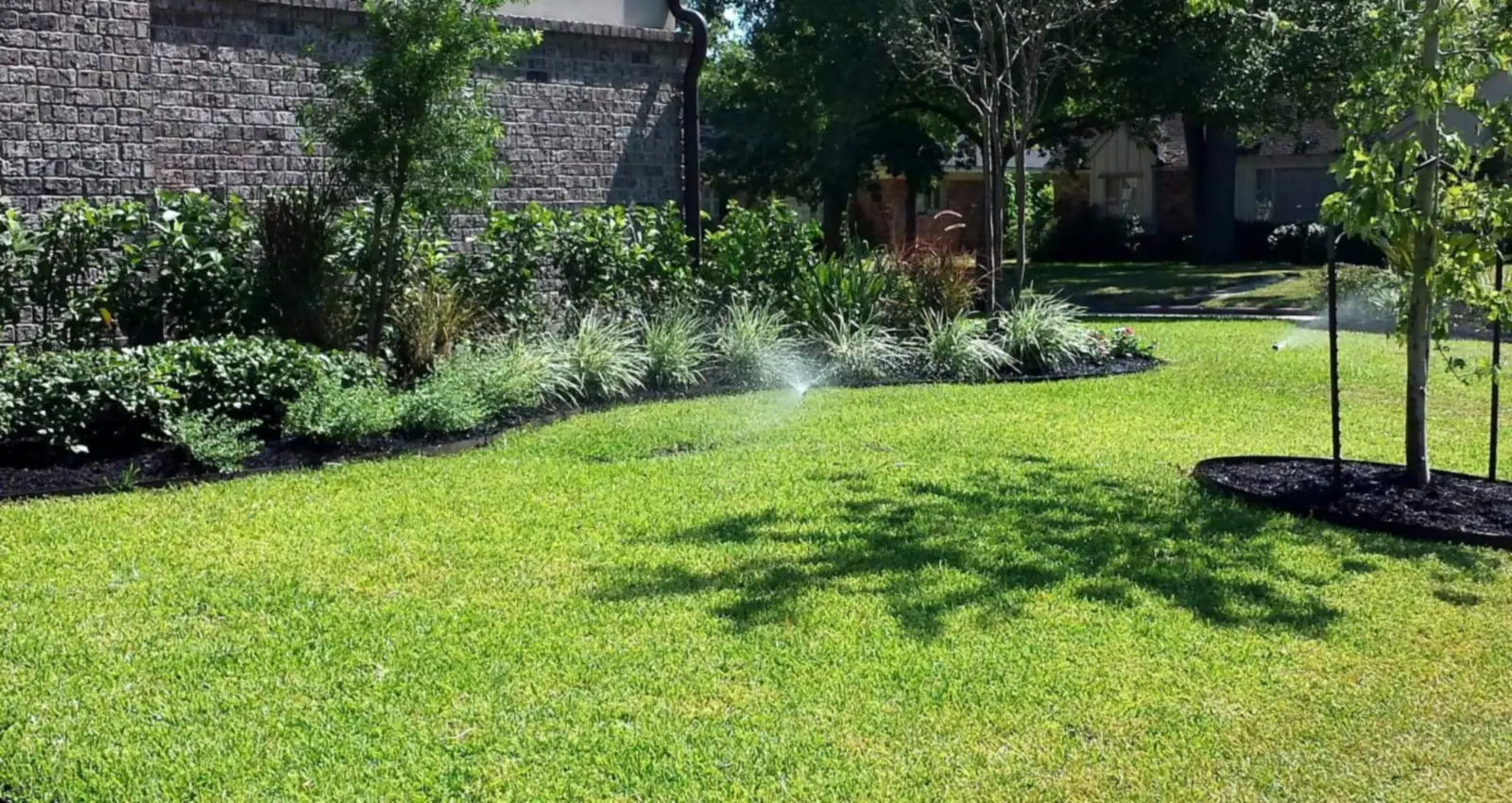
Irrigation system installation in Houston is about putting the right amount of water in the right place, then shutting off when the sky does the work for you. A well-designed sprinkler system keeps St. Augustine green through August, keeps new beds alive through their first summer, and does it without soaking your slab or running during a thunderstorm. A poorly designed one wastes water, drowns some areas, and leaves others bone dry.
Our irrigation work is TDLR licensed, and we install Hunter irrigation products. Every system starts with the lot itself: how much sun each area gets, what is planted there, how the yard drains, and how much water pressure your meter delivers. From there we lay out zones, choose heads and drip, and set up a controller that adjusts to Houston weather instead of running the same schedule from May to October.
What's under it · tap a layer
Sod. Living turf over amended topsoil, graded so rain runs off toward an outlet instead of sitting on the clay.
01
When a New Irrigation System Makes Sense
Hand watering works for a small patch of grass. It stops working when the lawn wraps around the house, when beds are spread across the yard, or when you travel in summer. If you have just invested in new sod, a new planting plan, or trees, an automatic system is what keeps that investment alive through a Houston heat wave.
It also makes sense to replace a system rather than repair it when the original was never laid out properly. Common signs are dry strips between heads, sprays hitting the fence or the driveway, pipes that break every season, or a controller from two decades ago that cannot be programmed for seasonal changes.
02
How Irrigation System Installation Works for Houston Lots
A sprinkler system is split into zones. Each zone is a valve feeding a group of heads that apply water at a similar rate. Lawn spray heads, rotors, and Drip irrigationLow-flow tubing or emitters that deliver water directly to plant roots, reducing waste and keeping foliage dry. should never share a zone, because they apply water at very different speeds. Mixing them is how you end up with a soggy bed next to a crispy lawn.
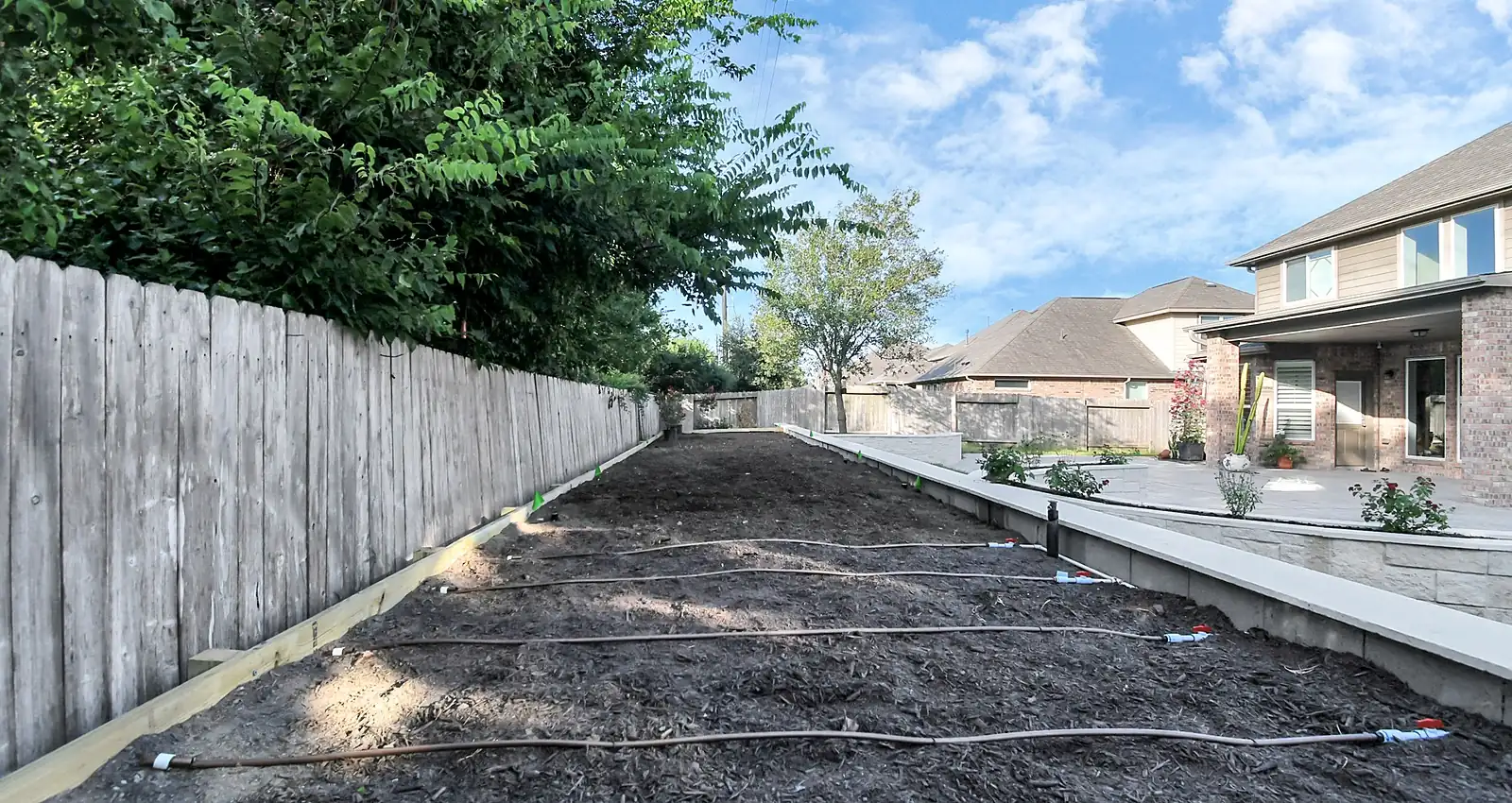
Expansive clayClay soil that swells when wet and shrinks when dry. Much of the Houston area sits on it, and it affects foundations, paving and drainage design. In practice: Keeping soil moisture around a slab foundation steady, without ponding or bone-dry spells, is part of good drainage design here. absorbs water slowly. A spray head can put down water faster than clay soaks it up, so the extra runs off onto the sidewalk. We counter this with efficient nozzles such as Hunter MP Rotators, which apply water slowly, and with cycle and soak scheduling that waters in shorter runs with a pause between. Beds and foundation plantings get drip irrigation, which puts water at the roots instead of on leaves, walls, and the slab.
Texas rules require a Backflow preventerA device that keeps irrigation water from flowing back into the drinking water supply. device to protect drinking water and a rain or moisture shut-off on new systems, and some cities also require a permit and backflow test. Those are part of a licensed installation, not optional upgrades.
03
Our Irrigation Installation Process
We plan the system on paper before a trench is dug, so every zone has a purpose and every head has a reason to be where it is.
- Site visit to check water pressure and flow, sun exposure, soil, slopes, and existing plantings
- Zone layout grouping areas by plant type, sun, and head type, with head-to-head coverage on lawns
- Utility locates through 811 before any trenching
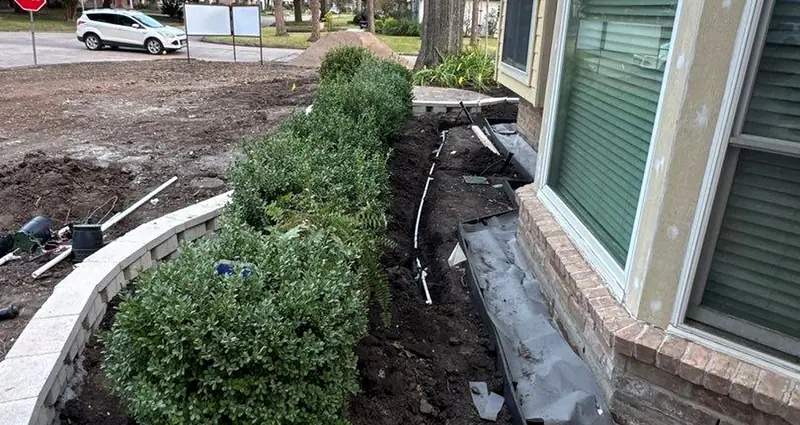
- Trenching and pipe installation, with sleeves under walks and drives where needed
- Valve manifolds set in boxes that stay accessible, with wiring run back to the controller
- Backflow device installed to code, with testing where the city requires it
- Heads, rotors, and drip installed, flushed, and adjusted for arc and distance
- Controller programmed with seasonal schedules and a rain or moisture sensor connected
04
Irrigation Materials and Options
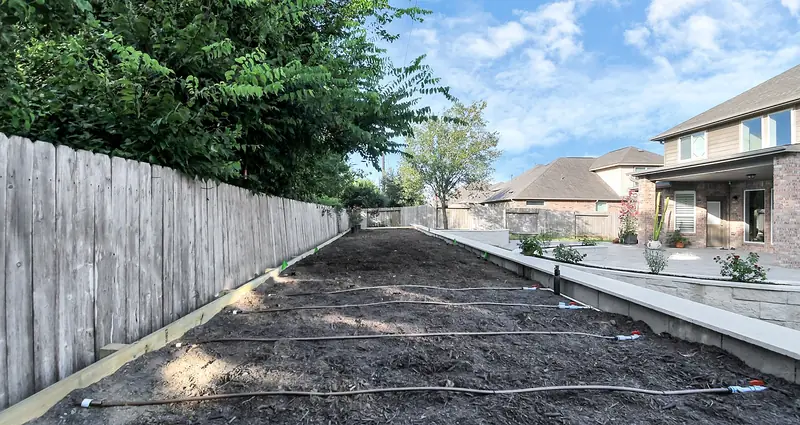
We install Hunter components across the system: Pro-Spray bodies for lawn areas, MP Rotator nozzles where slow, even application matters, PGP rotors for larger open turf, and Hunter drip and point-source emitters for beds. Pressure-regulated heads keep spray from misting off in the wind when your line pressure runs high.
On the control side, a smart controller such as Hunter Hydrawise adjusts run times based on local weather data and lets you manage zones from your phone. Combined with a rain sensor, it stops the system from running during or right after a storm, which is one of the easiest ways to cut your water bill. Drip zones can include a filter and pressure regulator to protect the emitters.
05
What Drives Irrigation Installation Cost in Houston
Cost depends mainly on the number of zones, the total area covered, and the mix of spray, rotor, and drip. Lot shape matters: a long narrow yard with beds on three sides takes more zones than an open rectangle. Boring or sleeving under existing driveways and walkways adds labor.
Other factors include the type of controller, whether a new backflow device is needed, permit requirements in your city, and how much finished landscape must be worked around. Installing before new sod or beds is simpler than trenching through them. The ballpark price tool gives you a starting range before the site visit.
06
Irrigation Mistakes We Fix on Houston Properties
We regularly replace systems where heads were spaced too far apart, leaving dry rings between them, and where a single zone mixes beds and lawn. We find spray heads aimed straight at foundations, which keeps the soil next to the slab wet and contributes to the swell and shrink cycle that stresses foundations. We also see controllers set to water every day for twenty minutes all year.
Another common problem is buried valve boxes. When valves get covered by MulchA layer of organic or mineral material spread over soil to hold moisture, moderate soil temperature and suppress weeds. In practice: In heavy rain, light mulch can float and wash onto paving. Placement and edging should account for water flow. or sod, a simple repair becomes a search. If your current system has some of these issues but is basically sound, irrigation repair may be the better path than a full replacement.
07
Projects That Pair With a New Irrigation System
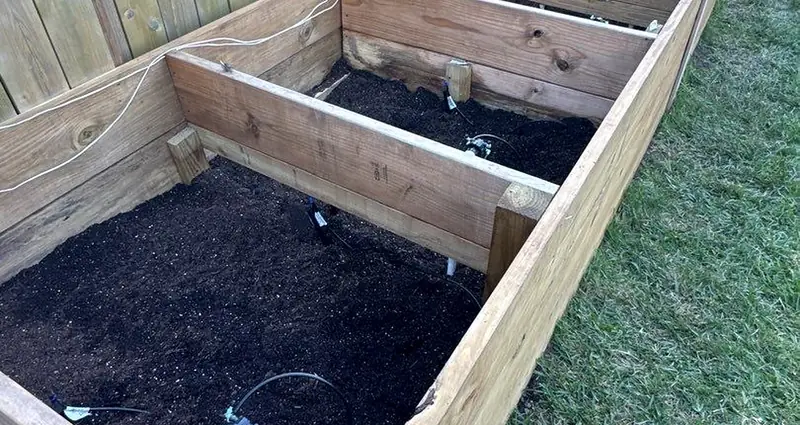
The best time to install irrigation is alongside the planting it serves. New sod installation and drip-fed beds go in together on most of our landscape installation projects. If you want to use less water overall, xeriscaping pairs well with a mostly drip system and a smaller lawn zone.
Irrigation is one part of our broader landscaping service in Houston, so the people who lay out your zones also know what is being planted in them.
08
Why Texas Urban Elements for Irrigation
Our irrigation work is TDLR licensed and built with Hunter products. A Home Scout visits your property before writing an itemized proposal, and our price-what-we-quote guarantee means no surprise charges once work starts. Because one team handles grading, planting, and irrigation, sprinkler lines are not cut by a different crew planting beds the following week.
We wrap up with a 72-hour post-completion walkthrough where we run each zone with you, show you how to use the controller, and fine-tune anything that is not covering correctly.
Irrigation System Installation Questions
Do you need a license to install sprinklers in Texas?
Yes. In Texas, irrigation systems must be installed by or under the supervision of a licensed irrigator, and the licensing program is administered through state agencies. Licensing covers backflow protection, design standards, and code compliance. Hiring a licensed installer protects your drinking water and helps make sure the system passes any city inspection required where you live.
How deep are sprinkler lines buried in Houston?
Lateral lines that feed the heads are typically buried several inches to about a foot deep, deep enough to protect them from aeration, edging, and foot traffic. Mainlines that stay pressurized are often set a little deeper. Houston rarely sees ground freezing, so depth is more about protection from yard work than from frost, though exposed backflow devices still need insulation in a hard freeze.
Is a smart controller worth it in Houston?
For most homeowners, yes. Houston weather swings between weeks of heavy rain and weeks of drought. A smart controller adjusts run times based on local weather and skips cycles after rain, which saves water and keeps lawns from staying soggy. You can also manage zones from your phone, which makes seasonal changes and vacation settings easy.
Should flower beds be on drip or spray irrigation?
Drip is usually the better choice. It puts water at the root zone, keeps leaves dry, which reduces fungal problems in Houston humidity, and avoids spraying walls, windows, and the slab. Drip also wastes far less water to wind and evaporation. Spray heads still make sense for lawns and some large groundcover areas.
Are there watering restrictions in the Houston area?
Some cities and utility districts around Houston set watering schedules or limit irrigation during drought stages, and rules can change with conditions. Check with your city or MUD for current restrictions. A smart controller makes it simple to program allowed days and times, and efficient nozzles and drip help your landscape stay healthy with fewer run times.
Related Services in Houston
- Irrigation Repair Houston
Broken heads, leaking valves, bad zones, and controller problems found and fixed on existing sprinkler systems.
- Sod Installation Houston
St. Augustine, Bermuda, and Zoysia sod installed after grading and drainage are confirmed, not before.
- Xeriscaping Houston
Drought-tolerant landscape design using native Texas plants and gravel mulch to dramatically cut irrigation needs.
- Artificial Turf Installation Houston
Low-maintenance turf installed on a compacted decomposed granite base with proper subsurface drainage.
- Flower Bed Installation Houston
Defined flower and plant beds with proper edging, amended soil, and species selected to thrive in Houston's heat and humidity.
- Backyard Landscaping Houston
Complete backyard transformations including drainage, planting, and hardscape integration.
Irrigation System Installation is part of our Landscaper Houston services. Texas Urban Elements is a Houston landscape designer that designs and builds every part of the yard.
Need an Assessment?
We assess your yard and provide a permanent solution. Professional project consultation. A Home Scout personally visits every property.
What you get
- A Home Scout on siteA trained scout walks and measures every property before a proposal is written.
- Itemized written proposalPriced line by line, and we price what we quote.
- One team, every tradeNo subcontractor hand-offs between drainage, base and finish.
- 72-hour walkthroughWe come back after completion to check the work with you.
- Backed by guaranteesDrainage Performance Guarantee and a structural warranty on hardscape.
Texas Urban Elements job photos
Irrigation System Installation jobs in Houston
Photos from our own projects, edited for the web. Tap a thumbnail to see it larger.
Let's Get Started
Don't wait until the problem gets worse. Schedule your professional project consultation today.
For a full overview of landscaper options in Houston, see our Landscaper Houston page.