
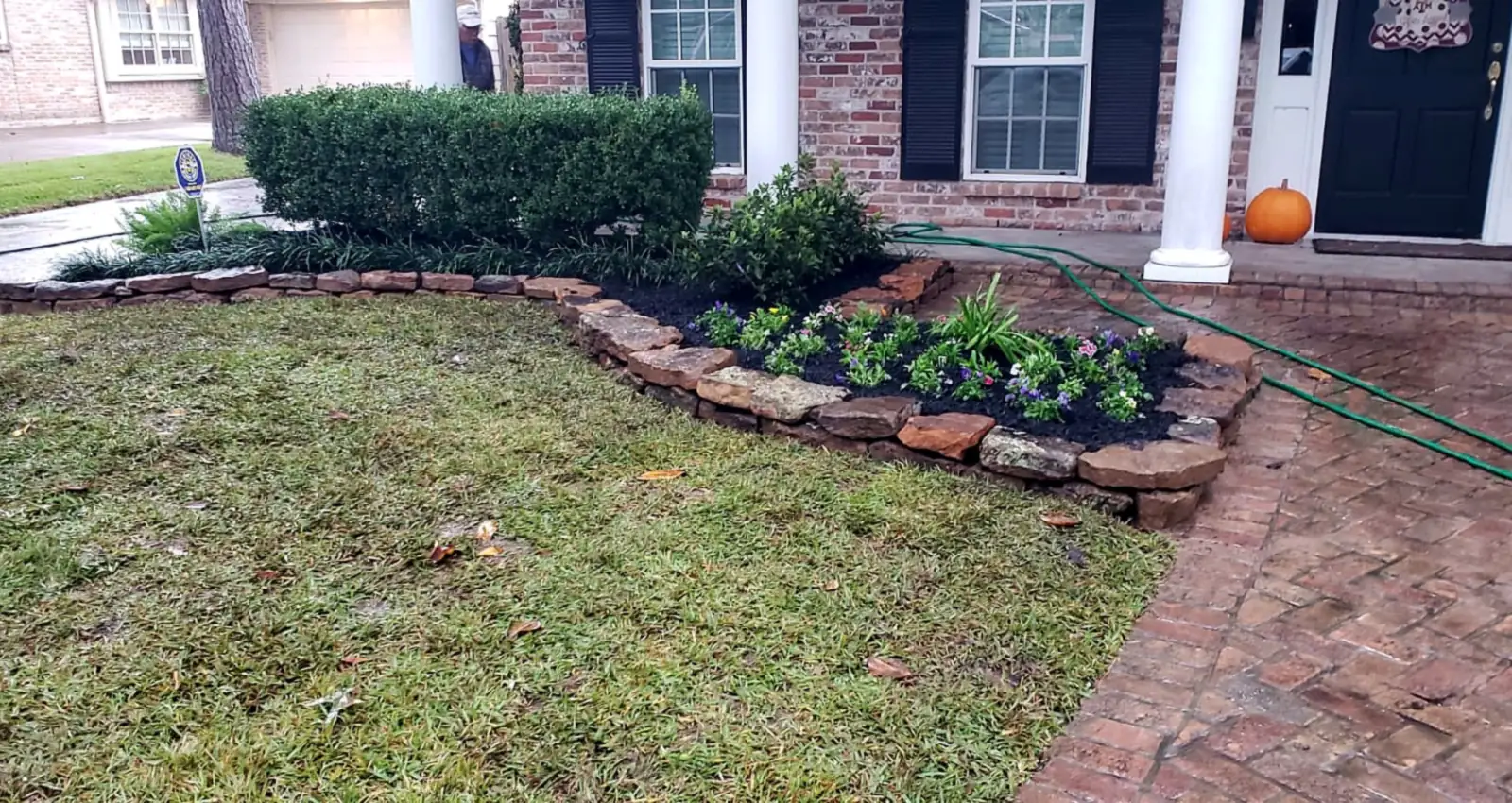
Flower bed installation in Houston has to solve two opposite problems in the same year: beds that sit in water after a spring storm and beds that bake in August. Most failed beds we replace were built as a strip of MulchA layer of organic or mineral material spread over soil to hold moisture, moderate soil temperature and suppress weeds. In practice: In heavy rain, light mulch can float and wash onto paving. Placement and edging should account for water flow. over untouched clay, filled with whatever was blooming at the store that weekend. They look good for a month, then the plants drown, cook, or get swallowed by Bermuda creeping in from the lawn.
A bed that lasts starts with its shape and its soil. We set clean edges that hold the line against grass, raise or amend the soil so roots can breathe, slope the bed so water leaves it, and choose plants by sun, shade, and size at maturity. This page covers both flower beds and plant beds, from a seasonal color border along the walk to a full shrub bed wrapping the foundation.
What's under it · tap a layer
Hardwood mulch. A layer over the soil that holds moisture, evens out soil temperature and keeps weeds down.
01
Signs It Is Time for New Flower Beds
Beds tell you when they are not working. Plants that die back in the same corner every spring usually mean saturated soil. Mulch that floats onto the sidewalk after a storm means the bed has no edge and no slope. Grass runners growing through the middle mean the border was never set deep enough to stop them.
- Shrubs and perennials that keep dying even with regular watering
- Beds that wash out or spill mulch onto walks and driveways during heavy rain
- Soil or mulch piled up against the brick, covering Weep holeA small opening near the base of a wall that lets trapped water escape. In practice: A retaining wall that cannot drain is a wall that will eventually move. TUE details always show how water leaves the back of the wall.
- Grass and weeds taking over because the edge is broken or missing
- Overgrown builder shrubs blocking windows and crowding the foundation
02
How Flower Bed Installation Works With Houston Clay
Native Expansive clayClay soil that swells when wet and shrinks when dry. Much of the Houston area sits on it, and it affects foundations, paving and drainage design. In practice: Keeping soil moisture around a slab foundation steady, without ponding or bone-dry spells, is part of good drainage design here. holds water for days after rain, then shrinks and cracks in drought. Many ornamental plants cannot tolerate wet roots for long, so the bed needs better structure than the ground around it. We loosen the existing soil and blend in compost and, where drainage is poor, expanded shale, which helps open up heavy clay. In very wet spots, the bed is raised a few inches so roots sit above the saturated layer.
Grade still matters inside the bed. Foundation beds should Grade and slopeGrade is the level of the ground surface, and finished grade is that level after work is complete. Slope, or fall, is the rate at which a surface drops over distance. Every hard surface needs some fall so water does not sit on it. from the house, and the finished soil and mulch should stay below the weep holes and leave the slab edge visible. That gap helps keep moisture off the brick and lets you spot termite tubes. Where beds sit at a low point in the yard, the water problem gets solved first through yard drainage solutions or a bed drain.
03
Our Flower Bed Installation Process
We build beds in a fixed sequence so the soil, edge, and irrigation work together instead of fighting each other.
- Walk the property to note sun hours, shade from trees and the house, and drainage paths
- Lay out bed lines with paint or hose so you can see and adjust curves before digging
- Remove existing turf and roots, and clear out declining builder shrubs
- Loosen and amend the soil with compost and expanded shale, raising wet areas
- Install edging set deep enough to stop grass runners
- Run Drip irrigationLow-flow tubing or emitters that deliver water directly to plant roots, reducing waste and keeping foliage dry. or adjust existing heads so the bed gets water at the roots
- Plant at the correct depth and spacing for Mature sizeThe height and spread a plant reaches when fully grown. Spacing, measured center to center, should be set by this size, not by the plant's size on delivery day. In practice: Overplanting small shrubs against a house leads to crowding, poor airflow and moisture against the foundation within a few years.
- Finish with two to three inches of mulch, kept clear of plant stems and the slab edge
04
Edging, Mulch, and Plants for Houston Flower Beds
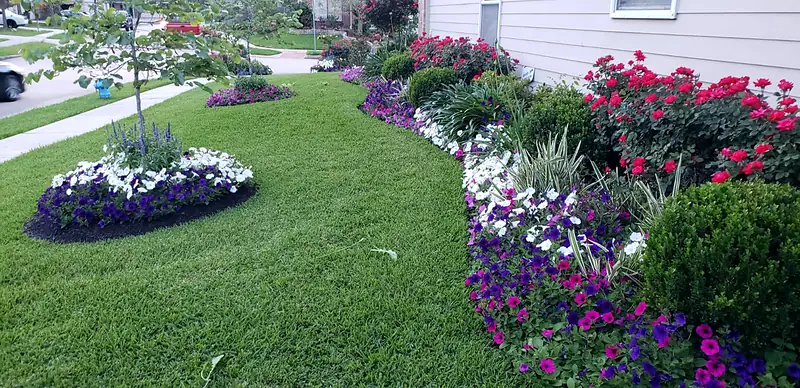
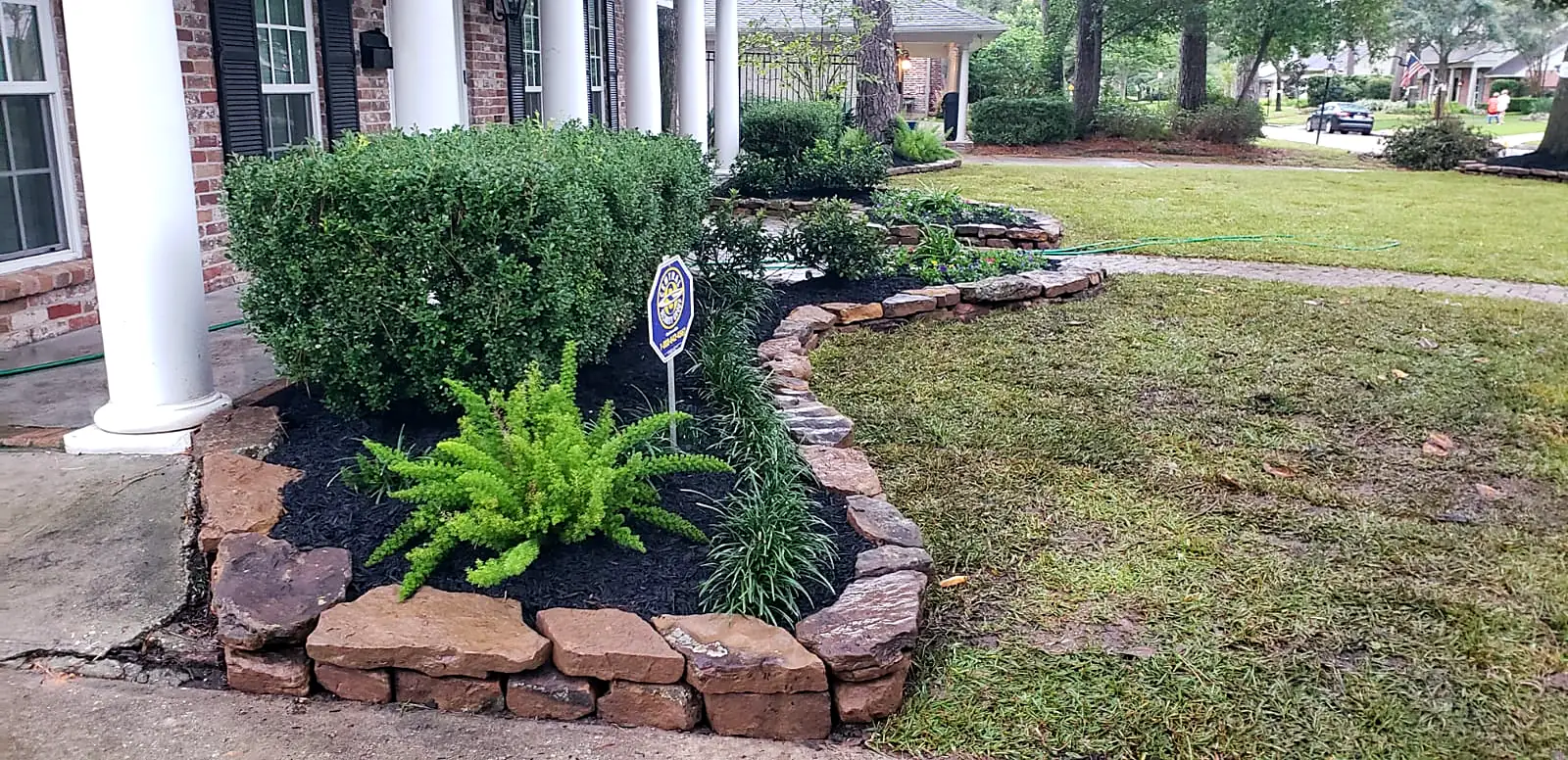
Edging is what keeps a bed crisp. Steel edging gives a thin, clean line and handles curves well. Belgard wall block or stone borders create a low raised edge with more presence, which also helps hold soil in a raised bed. Poured concrete mow strips give mowers a clean track. Hardwood, pine bark, and cedar mulch all work; darker hardwood mulch is the most common look here.
For sun, reliable Houston performers include lantana, salvia, esperanza, firebush, Turk's cap, dwarf yaupon, Indian hawthorn, and Gulf muhly grass. Many of these are native or well adapted, and they attract pollinators. For shade under oaks, cast iron plant, holly fern, liriope, and Turk's cap hold up well. Seasonal color such as begonias in summer or pansies in winter can fill pockets near the entry without making the whole bed high maintenance.
05
Flower Bed Installation Cost Factors in Houston
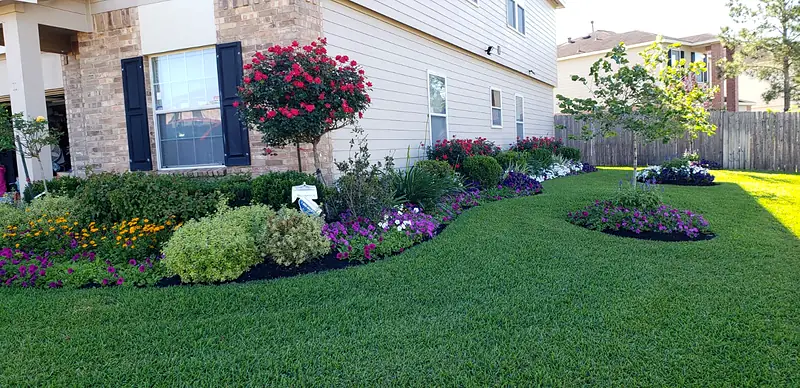
The size and number of beds set the baseline. From there, cost is driven by how much removal is needed, the type and length of edging, how much soil amendment or raising the beds require, and plant sizes. A bed built with larger container shrubs looks finished on day one but costs more than one planted with smaller sizes that fill in over a couple of seasons.
Drip irrigation, landscape lighting, and drainage corrections add to the total but protect the plants. To see a rough range for your yard, use our ballpark price tool.
06
Common Flower Bed Mistakes We Redo
The biggest one is building beds on raw clay with a layer of mulch on top. Roots stay shallow and rot in spring or dry out in summer. Close behind is planting for the size on the nursery tag instead of mature size, which leaves shrubs pressed against windows in three years and needing constant shearing.
We also redo beds where landscape fabric was laid under mulch and has since become a mat of weeds rooted on top of it, beds piled high against brick veneer, and beds with spray heads that soak the wall every morning. Each of these is a design decision, and each is easy to get right on the first pass.
07
Pairs Well With Flower Bed Installation
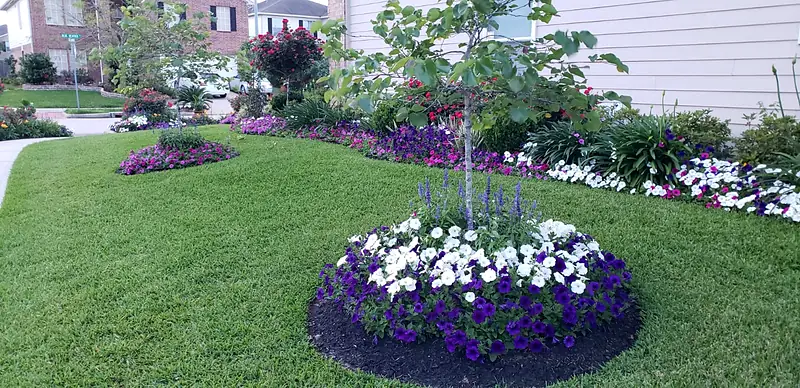
New beds look best framed by healthy turf, so many projects include sod installation at the same time. Beds that hold their own with less water are the heart of xeriscaping. Lighting brings them to life at night through landscape lighting installation. If you want the beds drawn into a full plan first, garden design maps out plant palettes and layout.
Beds are one piece of our full range of landscaper services in Houston.
08
Why Texas Urban Elements Builds Your Beds
A Home Scout visits your property before a proposal is written, so the plant list is based on your actual sun and soil, not a guess from photos. One team handles drainage, soil prep, edging, irrigation, and planting, so there is no gap between the crew that digs and the crew that plants. Our irrigation work is TDLR licensed.
Proposals are itemized and covered by our price-what-we-quote guarantee. We come back for a 72-hour post-completion walkthrough, and we serve homeowners across Houston, Katy, Sugar Land, Spring, and The Woodlands.
Flower Bed Installation Questions
What flowers hold up to Houston heat?
Heat-tolerant performers include lantana, esperanza, firebush, salvia, pentas, Turk's cap, and vinca, along with ornamental grasses like Gulf muhly. Many are Texas natives or adapted plants that handle humidity and hold their color through summer. Match each plant to its sun exposure, because a full-sun plant in afternoon shade will bloom poorly, and a shade plant in full sun will scorch.
How deep should a flower bed be?
Most beds need about eight to twelve inches of loosened, amended soil for roots to establish well. In Houston clay, that usually means working compost and expanded shale into the existing soil, and raising beds a few inches in wet areas. Shrubs need a wider hole than their root ball, but not a deeper one, so they do not settle below grade.
Should I put landscape fabric under mulch?
Usually not in planted beds. Over time, mulch breaks down on top of the fabric, weeds root into that layer, and the fabric blocks organic matter from improving the soil. A thick layer of mulch and good edging control weeds better in most Houston beds. Fabric still has a place under gravel and decomposed granite areas.
How far should flower beds be from the foundation?
Beds can sit against the house, but the soil and mulch should stay below the weep holes and leave several inches of slab edge exposed. The bed should slope away from the foundation, and shrubs should be planted far enough out that they do not touch the wall at full size. Avoid spray heads aimed at the brick.
Related Services in Houston
- Garden Design Houston
Planting plans built for Houston heat, clay and shade: bed layouts, plant palettes and soil prep drawn into your landscape design.
- Landscape Retaining Walls Houston
Lower decorative walls that terrace slopes, define planting beds, and add structure to outdoor spaces.
- Tree Planting Houston
Shade and ornamental trees selected for Houston soil and planted at the right depth with a watering plan.
- Sod Installation Houston
St. Augustine, Bermuda, and Zoysia sod installed after grading and drainage are confirmed, not before.
- Irrigation System Installation Houston
Smart irrigation systems sized to your lot's water requirements and designed around your sod species and sun exposure.
- Artificial Turf Installation Houston
Low-maintenance turf installed on a compacted decomposed granite base with proper subsurface drainage.
Flower Bed Installation is part of our Landscaper Houston services. Texas Urban Elements is a landscape design company in Houston that designs and builds every part of the yard.
Need an Assessment?
We assess your yard and provide a permanent solution. Professional project consultation. A Home Scout personally visits every property.
What you get
- A Home Scout on siteA trained scout walks and measures every property before a proposal is written.
- Itemized written proposalPriced line by line, and we price what we quote.
- One team, every tradeNo subcontractor hand-offs between drainage, base and finish.
- 72-hour walkthroughWe come back after completion to check the work with you.
- Backed by guaranteesDrainage Performance Guarantee and a structural warranty on hardscape.
Texas Urban Elements job photos
Flower Bed Installation jobs in Houston
Photos from our own projects, edited for the web. Tap a thumbnail to see it larger.
Let's Get Started
Don't wait until the problem gets worse. Schedule your professional project consultation today.
For a full overview of landscaper options in Houston, see our Landscaper Houston page.