
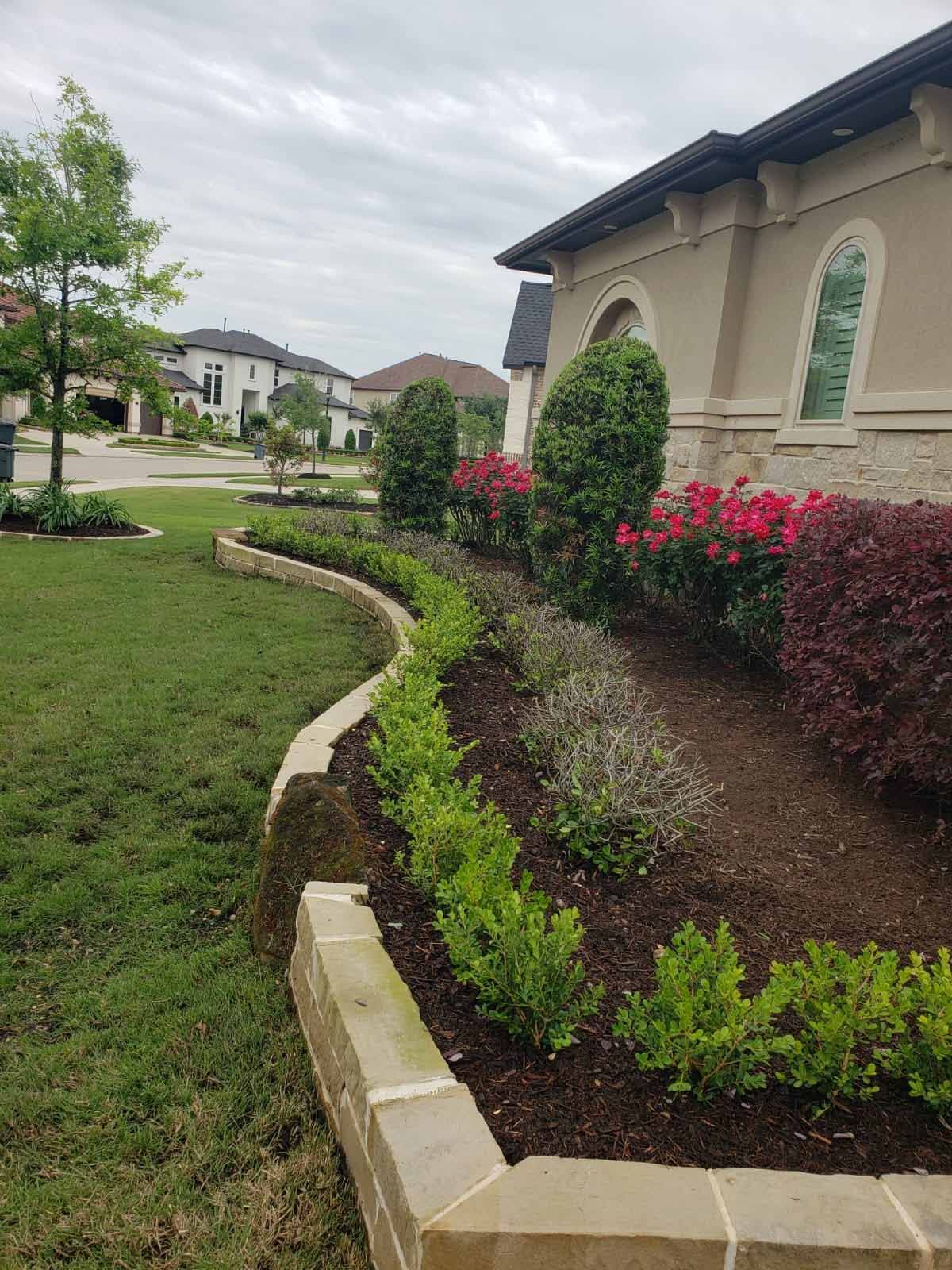
Sod installation in Houston looks simple from the street: pallets arrive, grass goes down, the yard turns green by dinner. What decides whether that lawn is still thick in two summers happens before the first roll is unloaded. The grade under it, the drainage around it, and the grass variety matched to your sun all have to be right first, because new sod cannot fix a yard that holds water.
We treat sod as the last layer of a lawn, not the whole job. That means checking how rain moves across your lot, correcting low spots, preparing the soil surface so roots can push into Expansive clayClay soil that swells when wet and shrinks when dry. Much of the Houston area sits on it, and it affects foundations, paving and drainage design. In practice: Keeping soil moisture around a slab foundation steady, without ponding or bone-dry spells, is part of good drainage design here., and choosing between St. Augustine, Zoysia, and Bermuda based on how many hours of direct sun each part of the yard actually gets.
What's under it · tap a layer
Sod. Living turf over amended topsoil, graded so rain runs off toward an outlet instead of sitting on the clay.
01
Signs Your Yard Needs New Sod, Not Just More Seed or Fertilizer
Some lawns can be nursed back. Others are past that point. If more than about a third of the yard is bare dirt, weeds, or thin runners, overseeding and fertilizer usually just feed the weeds. Warm-season grasses in Houston spread by runners, and St. Augustine is not sold as seed at all, so a failing St. Augustine lawn has to be plugged or resodded.
Look closely at where the dead areas are. Brown patches along a fence, under a live oak, or at the bottom of the yard often point to shade or water problems rather than bad grass. Those spots need a fix underneath first.
- Large bare or muddy areas after construction, a pool build, or a tree removal
- Grass that dies in the same low spot after every heavy rain
- A lawn overrun by crabgrass, nutsedge, or dallisgrass
- St. Augustine thinned out by chinch bugs, brown patch, or take-all root rot
- New build yards with thin builder sod laid over packed fill
02
How Sod Installation Works on Houston Clay
Most Houston yards sit on expansive clay. It swells when wet, shrinks and cracks when dry, and drains slowly. Sod laid straight onto compacted clay has a hard time sending roots down, so it stays shallow and burns up the first time watering slips in August. A thin layer of sandy loam or screened topsoil, spread and leveled over a loosened surface, gives new roots a place to start before they reach the native soil.
Grade matters just as much. Water should move away from the foundation and toward a SwaleA shallow, gently sloped channel in the ground, often grassed, that guides surface water toward an outlet. In practice: Side-yard swales between houses are common on Houston lots and are easily blocked by fences, beds or fill., drain, or street, with no pockets where it can sit. Soggy roots invite brown patch and root rot, which are the two most common reasons new St. Augustine fails here. If your yard has PondingStanding water that remains on lawn, beds or paving after rain, usually in a low spot lower than its surroundings., the fix belongs to yard drainage solutions or lawn grading and leveling first, and sod goes down only after that work is confirmed.
03
Our Sod Installation Process, Step by Step
Every lawn follows the same order, because each step protects the one after it.
- Site visit: a Home Scout walks the yard, notes sun hours by area, and checks how water drains
- Removal: old turf and weeds are stripped and cleared, not buried
- Grade correction: low spots filled, high spots cut, and slope set away from the slab
- Soil prep: the surface is loosened and a layer of sandy loam or topsoil is spread and leveled
- Irrigation check: heads are adjusted or added so every new section gets coverage
- Laying: rolls or slabs are set in a staggered, brick-style pattern with tight seams and cut edges
- Rolling and first soak: the sod is rolled for soil contact and watered deeply the same day
- Watering plan: you get a written schedule that tapers from daily watering to deep, less frequent cycles
04
Choosing a Sod Variety: St. Augustine, Zoysia, or Bermuda
St. Augustine is the default Houston lawn for good reason. It handles heat and humidity, fills in quickly, and tolerates more shade than Bermuda. Raleigh is the common, affordable choice for full sun. Palmetto holds up better in partial shade and has a finer look. CitraBlue is a newer variety with a deep blue-green color and good shade tolerance, popular under mature trees.
Zoysia forms a dense, carpet-like turf that crowds out weeds and handles foot traffic well. It grows slower, so it takes longer to establish and recover from damage, and it wants more sun than shade-tolerant St. Augustine. Bermuda is the full-sun athlete: it needs roughly a full day of direct light, recovers quickly from wear, and suits open yards, dog runs, and sports areas. In shade it thins out fast.
Many yards end up with two varieties: Bermuda or Zoysia in the open sun and a shade-tolerant St. Augustine under the canopy. Where grass will not grow at all, a planted bed is the better answer.
05
Sod Installation Cost Factors in Houston
The biggest drivers are square footage and the variety you choose, since Zoysia and specialty St. Augustine cultivars cost more per pallet than Raleigh or common Bermuda. Removal of the old lawn, the amount of topsoil needed, and any grading or drainage corrections before laying add to the total.
Access plays a role too. A backyard with a narrow side gate means pallets get moved by hand or small equipment instead of being dropped next to the work area. Irrigation adjustments, new heads, or a full system add cost but protect the investment. For a rough range before a site visit, use our ballpark price tool.
06
What Goes Wrong With Cheap Sod Jobs
The most common failure we see is sod laid directly over the old dead lawn or over packed construction fill. The roots never connect with the ground below, the sod dries out from the edges, and seams open into gaps. The second is grass chosen for price instead of light. Bermuda on a shaded north side thins out within a season no matter how much you water.
We also fix lawns that were laid too high against the foundation, covering Weep holeA small opening near the base of a wall that lets trapped water escape. In practice: A retaining wall that cannot drain is a wall that will eventually move. TUE details always show how water leaves the back of the wall. and the visible slab edge, which invites moisture and termite problems. And we see plenty of yards where water was never checked, so the low corner turns to mush every spring.
07
Work That Pairs Well With New Sod
Sod is rarely a standalone project. A new lawn deserves a sprinkler layout that actually reaches it, so many clients add irrigation system installation or have existing zones reworked. Clean bed lines make the lawn look finished, which is where flower bed installation comes in. For full yard makeovers, sod is one piece of a larger backyard landscaping plan.
Our landscaping services in Houston page shows how sod fits with planting, grading, and irrigation.
08
Why Homeowners Choose Texas Urban Elements for Sod
We have been serving Houston since 2016, from Cypress and Tomball to Pearland and Missouri City. A Home Scout visits your property before any proposal is written, and the same team that grades the yard is the team that lays the grass. You get an itemized written proposal and a price-what-we-quote guarantee, so topsoil and removal are not surprise add-ons.
Because our crews are also NDS Certified drainage specialists and our irrigation work is TDLR licensed, the problems that usually kill new sod are handled in house. After the job, we come back for a 72-hour post-completion walkthrough to check seams, coverage, and watering.
Sod Installation Questions
What is the best time of year to lay sod in Houston?
Late spring through early fall is ideal, because warm-season grasses root fastest when soil temperatures are high. Sod can go down in Houston during most of the year, but winter installs root slowly since the grass is semi-dormant, and midsummer installs need very consistent watering. If you install in July or August, plan on daily watering for the first couple of weeks without exception.
How long before I can walk on new sod?
Keep foot traffic light for about two weeks, then gently tug a corner. If it resists, roots have started to grab. Most St. Augustine and Bermuda lawns are ready for normal use in three to four weeks with steady watering. Zoysia can take longer. Hold off on the first mow until the roots have anchored, and keep the mower blade high.
Which sod grows best in shade in Houston?
Shade-tolerant St. Augustine varieties such as Palmetto and CitraBlue handle partial shade better than Raleigh, and far better than Bermuda. Some Zoysia cultivars tolerate light shade too. No turfgrass does well in deep shade under a dense live oak canopy, so in those spots a mulched bed, groundcover, or shade planting is more reliable than replacing grass every year.
How often should I water new sod in Houston?
Water daily for the first one to two weeks so the soil under the sod stays moist, splitting it into two short cycles on hot days. Then taper to every other day, and by week four move to deep watering one to three times a week depending on rain and heat. Check whether your city has watering-day restrictions, since some Houston-area cities do.
Related Services in Houston
- Lawn Grading & Leveling Houston
Professional yard grading and leveling to prevent standing water and improve usability.
- Irrigation System Installation Houston
Smart irrigation systems sized to your lot's water requirements and designed around your sod species and sun exposure.
- Yard Drainage Solutions Houston
Custom drainage plans for Houston properties with standing water, soggy lawns, or chronic flooding issues.
- Artificial Turf Installation Houston
Low-maintenance turf installed on a compacted decomposed granite base with proper subsurface drainage.
- Flower Bed Installation Houston
Defined flower and plant beds with proper edging, amended soil, and species selected to thrive in Houston's heat and humidity.
- Backyard Landscaping Houston
Complete backyard transformations including drainage, planting, and hardscape integration.
Sod Installation is part of our Landscaper Houston services. Texas Urban Elements is a landscape designer Houston TX that designs and builds every part of the yard.
Need an Assessment?
We assess your yard and provide a permanent solution. Professional project consultation. A Home Scout personally visits every property.
What you get
- A Home Scout on siteA trained scout walks and measures every property before a proposal is written.
- Itemized written proposalPriced line by line, and we price what we quote.
- One team, every tradeNo subcontractor hand-offs between drainage, base and finish.
- 72-hour walkthroughWe come back after completion to check the work with you.
- Backed by guaranteesDrainage Performance Guarantee and a structural warranty on hardscape.
Let's Get Started
Don't wait until the problem gets worse. Schedule your professional project consultation today.
For a full overview of landscaper options in Houston, see our Landscaper Houston page.