
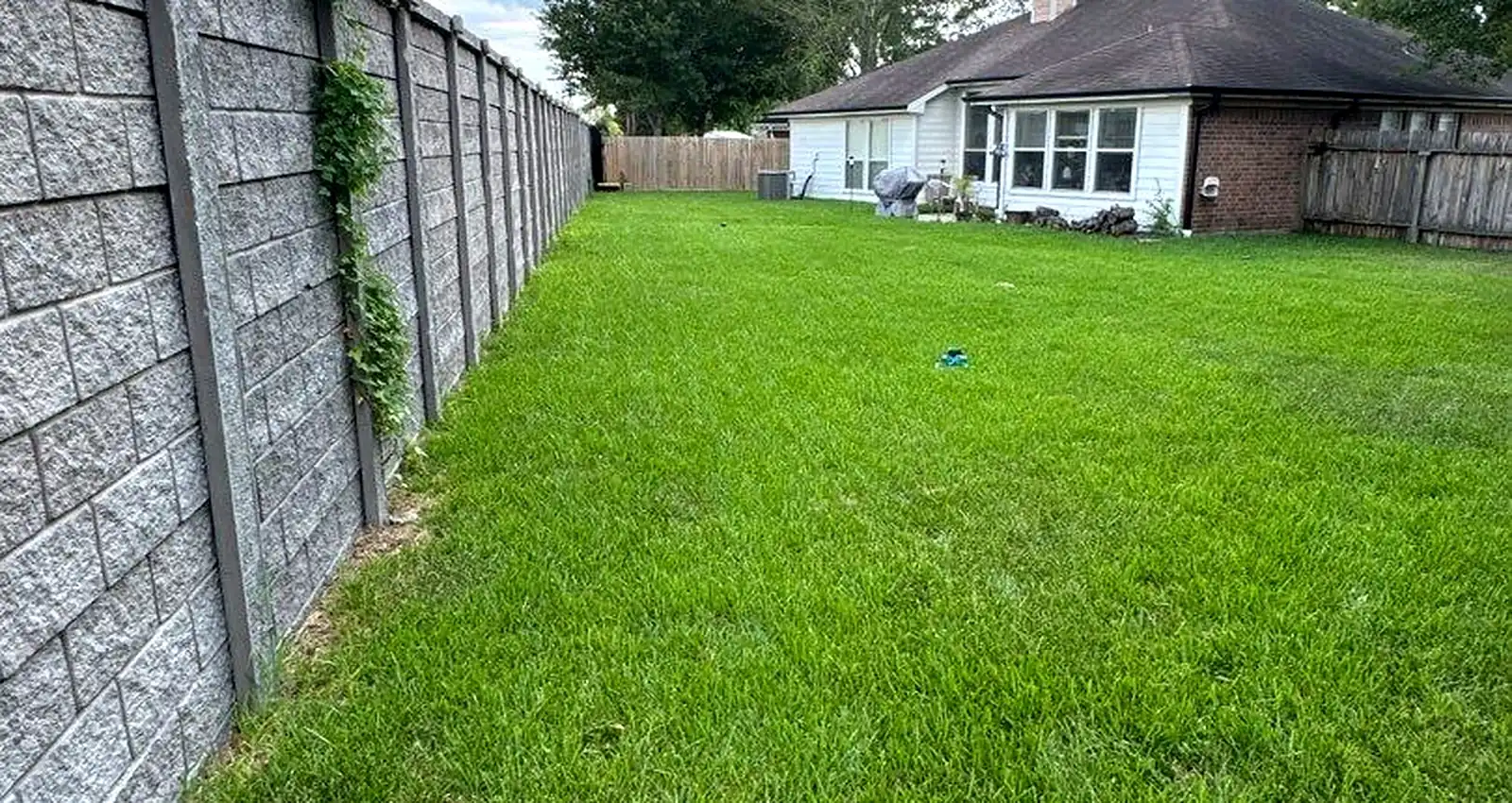
Lawn grading and leveling in Houston fixes the problem under most bad lawns: ground that sends water the wrong way or holds it in pockets. On a flat lot with Expansive clayClay soil that swells when wet and shrinks when dry. Much of the Houston area sits on it, and it affects foundations, paving and drainage design. In practice: Keeping soil moisture around a slab foundation steady, without ponding or bone-dry spells, is part of good drainage design here., a dip of an inch or two is enough to make a puddle that sits for days, kills the grass, and breeds mosquitoes. A yard that tilts toward the house is worse, because every storm pushes water against your slab.
Grading reshapes the surface so water moves where you want it. Leveling smooths out the bumps, ruts, and sunken spots that make a yard hard to mow and unpleasant to walk on. Done well, both are invisible once the grass grows back. You just notice that the yard dries out after a storm and the mower stops scalping the high spots.
What's under it · tap a layer
Sod. Living turf over amended topsoil, graded so rain runs off toward an outlet instead of sitting on the clay.
01
Signs Your Lawn Needs Grading or Leveling
Most homeowners notice the symptoms long before they connect them to grade. Water that stands for more than a day after a normal rain is the clearest sign. So is mud that never seems to dry along one side of the house, or a lawn that is lush in one spot and dead a few feet away.
- Puddles that last a day or more after rain
- Soil that slopes toward the foundation instead of away from it
- Bumps, ruts, and sunken areas from old tree stumps, utility trenches, or settled fill
- Mower scalping high spots and missing low spots
- ErosionSoil carried away by moving water, often seen as bare channels, exposed roots or sediment on paving. channels where water runs across the yard
- Soil or MulchA layer of organic or mineral material spread over soil to hold moisture, moderate soil temperature and suppress weeds. In practice: In heavy rain, light mulch can float and wash onto paving. Placement and edging should account for water flow. built up over the slab edge on one or more sides
02
How Lawn Grading Works on Flat Houston Lots
Houston lots often have very little natural fall. The goal is a slope steep enough to move water but gentle enough to look flat. A common guideline is that the ground should drop about six inches over the first ten feet away from the foundation, then continue at a gentler fall toward a SwaleA shallow, gently sloped channel in the ground, often grassed, that guides surface water toward an outlet. In practice: Side-yard swales between houses are common on Houston lots and are easily blocked by fences, beds or fill., drain, or the street. On small lots with neighbors on three sides, there is not much room, so precision matters.
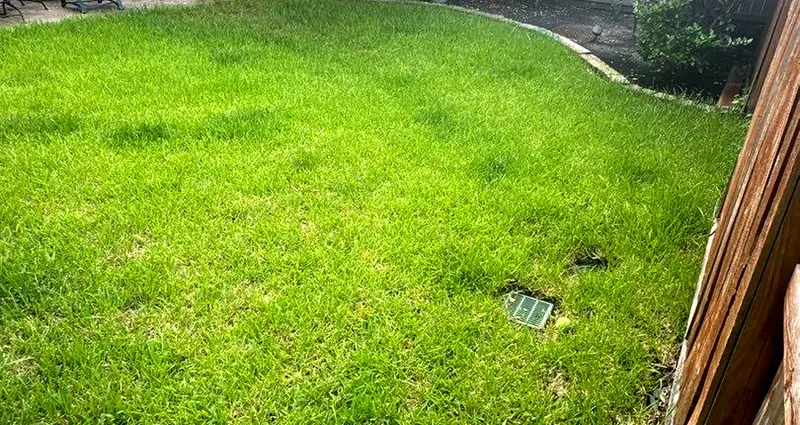
We shoot grades with a laser level rather than by eye, because a yard that looks level can still have water running the wrong way. Fill soil goes down in thin layers and is compacted so it does not settle into new low spots. Where the lot cannot reach an outlet by slope alone, grading is paired with Area drainA surface inlet with a grate that collects water from a low spot and sends it into an underground pipe. or a drain line, and larger cut and fill jobs fall under excavation and grading.
03
Our Lawn Grading and Leveling Process
Every grading job starts with measurement, not dirt. We want to know where water needs to go before we move any soil.
- Site visit to watch how the yard drains and identify low spots and outlets
- Laser elevations across the yard and along the foundation
- Utility locates through 811 before any digging
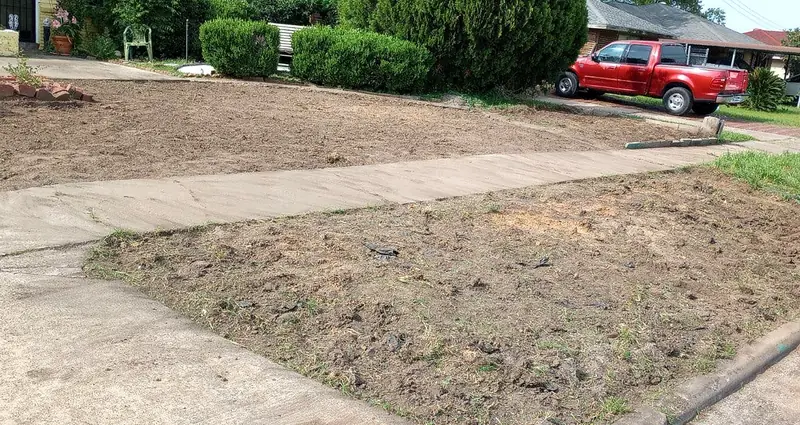
- Remove or cut sod where grades will change, saving it when it is healthy
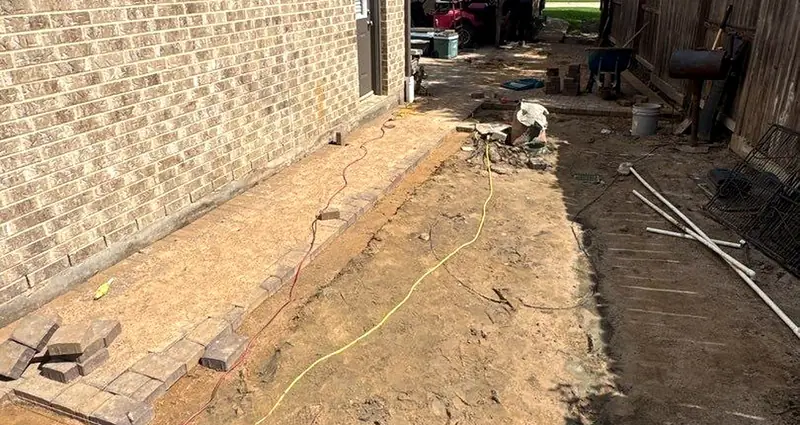
- Cut high areas and fill low areas with suitable soil, compacting in lifts
- Set final slopes away from the slab and toward swales, drains, or the street
- Topdress minor dips with a sand and soil blend where full regrading is not needed
- Replace or install sod, then water and check drainage after the first rain
04
Grading Methods and Materials
Not every yard needs the same approach. Minor unevenness can often be fixed by topdressing: spreading a thin layer of sand or a sand and soil blend over the lawn and working it into the low spots, letting the grass grow through. This works well for St. Augustine and Bermuda when the dips are shallow.
Deeper problems call for full regrading. That means stripping the turf, reshaping the soil, and relaying grass. Fill soil should be a stable material, not loose topsoil heaped against the foundation. Around trees, grade changes need care. Adding more than a couple of inches of soil over the roots of a live oak or other mature tree can starve the roots of oxygen, so we work around the root zone instead.
05
Lawn Grading and Leveling Cost Factors
The area being regraded and how far the soil has to move are the main drivers. Topdressing a few low spots is a small job. Regrading a whole backyard with imported fill, sod removal, and new sod is a larger one. Access for equipment also matters: a skid steer can do in hours what takes a crew days by hand, but only if it fits through the gate.
Other factors include haul-off of excess soil, imported fill, new drains or catch basins, and sod replacement. A rough range is available from our ballpark price tool.
06
Grading Mistakes We Fix
The most common mistake is fixing a low spot by dumping topsoil on it. Loose topsoil settles, and in a year the dip is back. Another is regrading without checking the outlet, so water moves off one low spot and pools in the next one at the fence line.
We also see yards where fill was piled against the foundation to make the slope look right, burying the slab edge and Weep holeA small opening near the base of a wall that lets trapped water escape. In practice: A retaining wall that cannot drain is a wall that will eventually move. TUE details always show how water leaves the back of the wall. and creating a path for water and termites. And we see neighbors' runoff that was never accounted for. Grading has to consider the water coming onto your lot as well as the water leaving it.
07
Work That Goes With Lawn Grading
Grading often reveals a need for collection points, which is where surface water drainage and catch basins come in. When the grade is done, the lawn usually needs sod installation to restore it. In yards where soil is washing out of slopes or beds, erosion control adds swales, rock, or planting.
Grading also sets up any future backyard landscaping, and it is part of our core landscaping services in Houston.
08
Why Texas Urban Elements for Grading
We are NDS Certified drainage specialists, and our drainage work carries a Drainage Performance Guarantee. That background matters on grading jobs, because the point is not a smooth yard, it is a yard that sheds water. A Home Scout walks the property and checks grades before writing an itemized proposal.
The same team grades, installs drains, and lays the sod, so the finished surface matches the plan. We back every proposal with a price-what-we-quote guarantee and return for a 72-hour post-completion walkthrough.
Lawn Grading & Leveling Questions
How much slope should a yard have away from the house?
A common guideline is about six inches of fall over the first ten feet from the foundation, with a gentler slope continuing to a swale, drain, or street. On tight Houston lots, that is not always possible, which is why grading is often combined with catch basins or drains. The key is that no water should flow back toward the slab.
Can I level my lawn without killing the grass?
For shallow dips, yes. Topdressing with a thin layer of sand or a sand and soil blend, a half inch or so at a time, lets St. Augustine and Bermuda grow through. Repeat as needed. Deeper low spots and slopes going the wrong direction need the sod lifted, the soil reshaped, and the sod relaid or replaced.
What is the difference between grading and leveling?
Grading sets the slope of the ground so water flows in the right direction. Leveling smooths out bumps and dips so the surface is even. A yard can be level but graded poorly, with water sitting in the middle. Most projects need both: the right fall toward an outlet and a smooth surface for mowing and walking.
When is the best time to regrade a yard in Houston?
Dry periods are best, because wet clay smears, compacts poorly, and is hard to shape. Late spring and fall often work well. Plan the work so new sod goes down when it can root, typically spring through early fall. Avoid grading right before a forecast of heavy rain if the surface will be bare.
Related Services in Houston
- Excavation and Grading Houston
Site prep, cut and fill, and finish grading that sets the slope every drain, slab, and paver base depends on.
- Sod Installation Houston
St. Augustine, Bermuda, and Zoysia sod installed after grading and drainage are confirmed, not before.
- Yard Drainage Solutions Houston
Custom drainage plans for Houston properties with standing water, soggy lawns, or chronic flooding issues.
- Irrigation System Installation Houston
Smart irrigation systems sized to your lot's water requirements and designed around your sod species and sun exposure.
- Artificial Turf Installation Houston
Low-maintenance turf installed on a compacted decomposed granite base with proper subsurface drainage.
- Flower Bed Installation Houston
Defined flower and plant beds with proper edging, amended soil, and species selected to thrive in Houston's heat and humidity.
Lawn Grading & Leveling is part of our Landscaper Houston services. Texas Urban Elements is a landscape design company in Houston that designs and builds every part of the yard.
Need an Assessment?
We assess your yard and provide a permanent solution. Professional project consultation. A Home Scout personally visits every property.
What you get
- A Home Scout on siteA trained scout walks and measures every property before a proposal is written.
- Itemized written proposalPriced line by line, and we price what we quote.
- One team, every tradeNo subcontractor hand-offs between drainage, base and finish.
- 72-hour walkthroughWe come back after completion to check the work with you.
- Backed by guaranteesDrainage Performance Guarantee and a structural warranty on hardscape.
Texas Urban Elements job photos
Lawn Grading & Leveling jobs in Houston
Photos from our own projects, edited for the web. Tap a thumbnail to see it larger.
Let's Get Started
Don't wait until the problem gets worse. Schedule your professional project consultation today.
For a full overview of landscaper options in Houston, see our Landscaper Houston page.