
Landscape Retaining Walls Houston, TX
Terracing and Structure for Outdoor Spaces
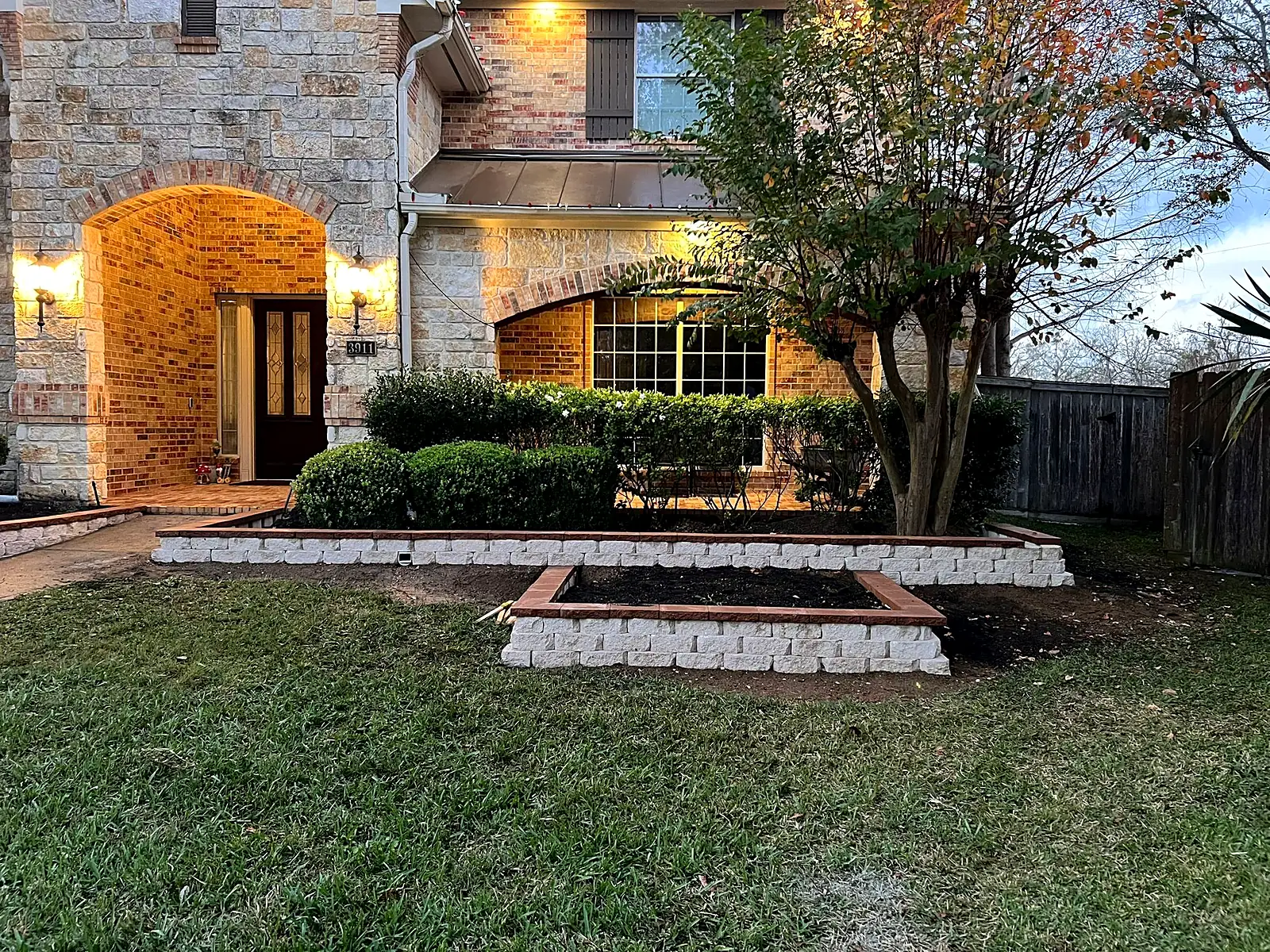
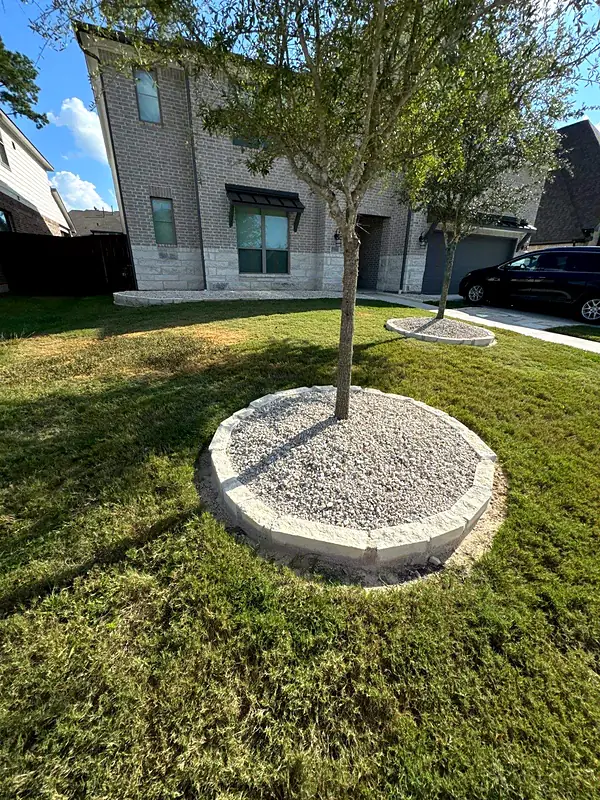
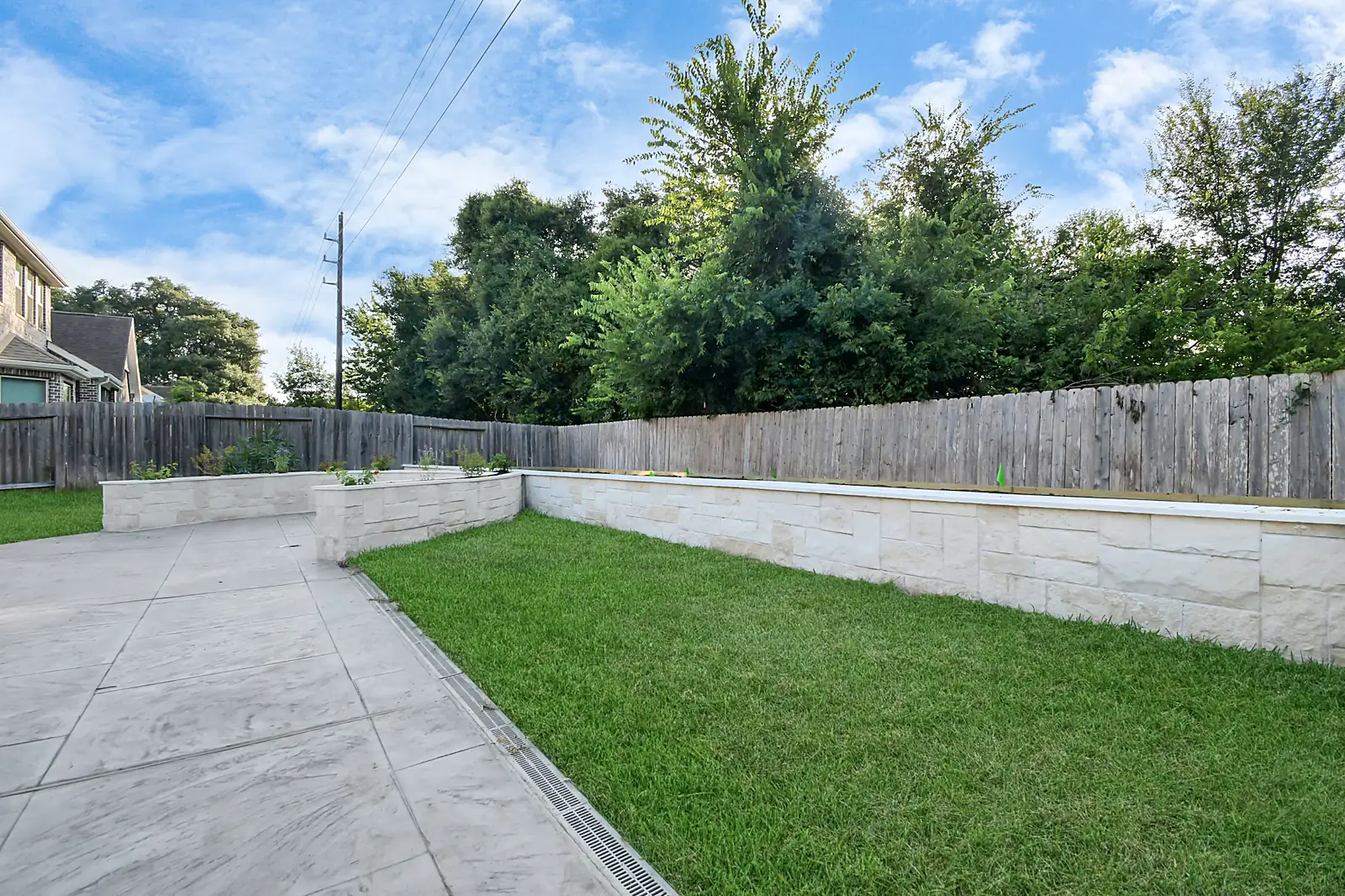
Landscape Retaining wallA wall built to hold back soil where the ground level changes. in Houston are the shorter walls that shape a yard: terraced beds on a gentle slope, a raised planter along the back fence, a curved seat wall around a fire pit, or a low border that keeps MulchA layer of organic or mineral material spread over soil to hold moisture, moderate soil temperature and suppress weeds. In practice: In heavy rain, light mulch can float and wash onto paving. Placement and edging should account for water flow. out of the lawn. They hold soil, but their main job is to give a garden structure and make a flat lot feel designed.
Short does not mean careless. Even an 18 inch wall holds wet clay and sits through Houston's swings from drought to downpour, so it needs a buried base and a way for water to drain. This page covers where low walls work best, how we build them, and how they connect to the planting, lighting, and irrigation around them. For taller structural walls, see our retaining wall contractor in Houston page.
What's under it · tap a layer
Wall block cap. A wall built to hold back soil where the ground changes level. A wall that can't drain will eventually move.
01
Where Landscape Retaining Walls Make the Biggest Difference
Most Houston lots are flat, so low walls are often how you create levels at all. A raised bed 18 to 24 inches tall lifts plants above soggy clay, puts flowers closer to eye level, and gives the yard a clear edge.
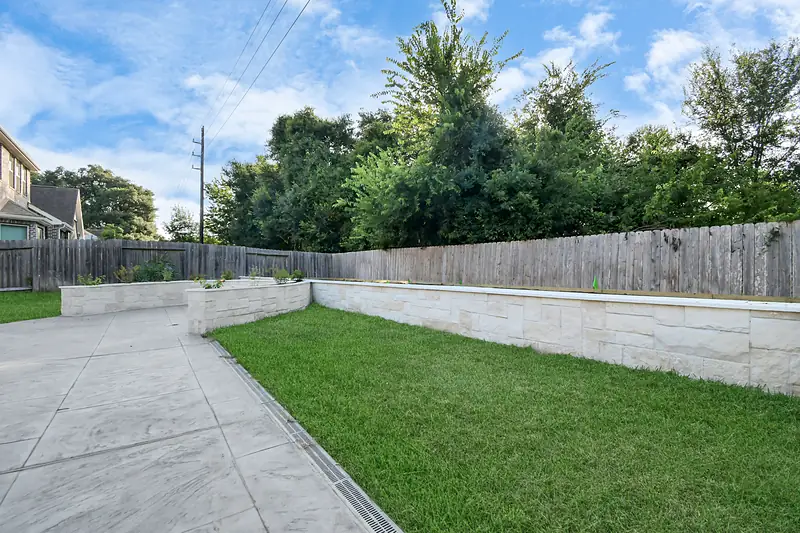
On gently sloped lots, a pair of short terraces usually works better than one tall wall. They are easier to build, need less reinforcement, and turn a slope that is hard to mow into usable planting space.
- Raised beds where clay stays wet and plants struggle
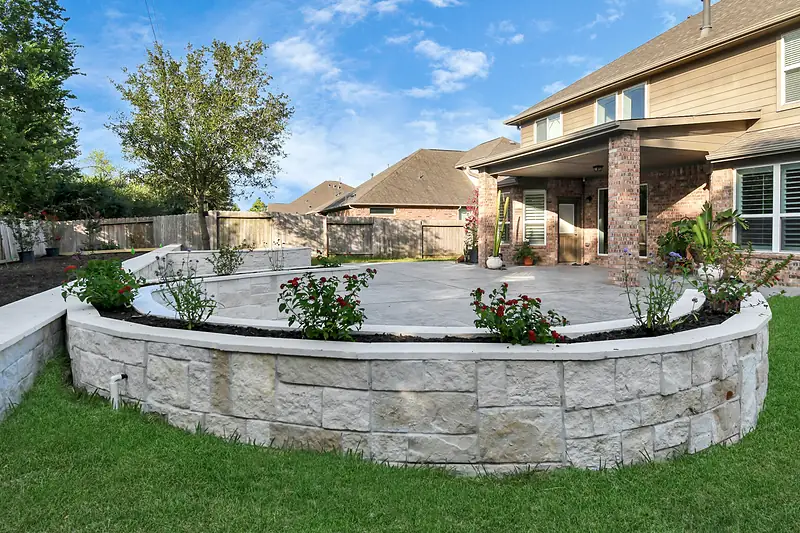
- Seat walls around a patio, fire pit, or outdoor kitchen
- Terraces that turn a gentle slope into usable beds
- Front yard borders that frame the house and entry walk
- Planters that hide utility boxes or AC units
02
How Low Landscape Walls Are Built to Last
A landscape wall still needs a trench, a compacted Base courseThe layer of compacted crushed stone or road base placed over the subgrade to support paving., and a buried first course. On Expansive clayClay soil that swells when wet and shrinks when dry. Much of the Houston area sits on it, and it affects foundations, paving and drainage design. In practice: Keeping soil moisture around a slab foundation steady, without ponding or bone-dry spells, is part of good drainage design here., skipping the base is why so many garden walls tilt or wave within a couple of years.
Raised beds need a drainage path too. Planting soil holds a lot of water after a heavy rain, and if it cannot drain out, the wall takes the pressure and the plant roots sit in PondingStanding water that remains on lawn, beds or paving after rain, usually in a low spot lower than its surroundings.. We place gravel behind and below the wall, fabric between the gravel and the soil, and a small perforated line or weep openings where the bed needs them.
Seat walls are usually freestanding, with finished faces on both sides. They are built on a solid base like any wall and capped with a broad, smooth cap that is comfortable to sit on.
03
Our Process for Landscape Retaining Walls
Because these walls live inside the garden, we plan them alongside beds, irrigation, and lighting so nothing has to be dug up later.
- Design: a Home Scout walks the yard, and we mark wall lines, heights, and bed sizes in the plan.
- Sleeves and wiring: irrigation sleeves and lighting conduit are placed under the wall line before the base goes in.
- Base: the trench is dug and crushed stone compacted below grade.
- Wall: courses are set level, with gravel behind them and fabric against the soil.
- Fill: raised beds get a planting mix suited to Houston heat, not the clay that came out of the trench.
- Caps and finish: caps glued, beds planted and mulched, and the lawn edge restored.
04
Materials for Landscape Retaining Walls
Belgard wall block is our most common choice for low walls because it comes in matching caps, corners, and seat wall units, and it pairs with Belgard pavers on the patio. Smaller units work well for tight curves around beds.
Natural stone gives a softer, older look and suits cottage gardens and wooded lots. FlagstoneFlat, irregular or cut slabs of natural stone used for patios, walks and wall caps. caps make a comfortable seat, and Texas limestone blends with most brick homes. Whatever you choose, we match the wall to the planting plan so the color and texture work with the plants in front of it.
05
Landscape Retaining Wall Cost Factors
Low walls cost less per foot than structural walls because they need less excavation and usually no GeogridA plastic mesh laid in layers behind a retaining wall and buried in the backfill to tie the soil mass to the wall.. The total still depends on length, height, and how many curves and corners the design has.
Material choice, seat wall caps, planting soil to fill raised beds, irrigation sleeves, lighting, and access all factor in. Removing old landscape timbers or edging adds a little. Our ballpark price tool gives you an early range, and the full plan can be phased if you want to build beds over time.
06
Common Mistakes with Garden Walls
The most common is building a raised bed around the trunk of a live oak or other mature tree. Piling soil over the root flare and shallow roots can slowly kill the tree. We keep walls outside the critical root zone or use a design that leaves the original grade around the trunk.
We also see stacked blocks set on grass with no base, beds filled with heavy clay that never drains, and walls that block the yard's surface drainage so water pools behind them. A low wall should work with the grade, not against it.
07
Pairs Well with Landscape Retaining Walls
Low walls are usually part of a larger planting plan. Our garden design work places walls, beds, and paths together, and flower bed installation fills them with plants suited to Houston heat and humidity.
Raised beds dry out faster than the ground, so irrigation system installation with drip zones keeps them healthy. A few low-voltage lights under the caps finish the look after dark.
08
Why Texas Urban Elements for Landscape Walls
One team handles the walls, planting, irrigation, and lighting, so the person setting the wall knows where the sleeves and wires need to go. We hold a TDLR irrigation license and Belgard Authorized Contractor status.
Design packages include CAD drawings and a planting plan, with 3D renderings available as a $497 upgrade credited toward the build. Every proposal is itemized and covered by our price-what-we-quote guarantee.
Landscape Retaining Walls Questions
What is a good height for a seat wall?
Most seat walls are built so the top of the cap sits about 18 to 20 inches above the patio, which is close to chair height. Depth matters too: a cap around 12 inches or deeper is comfortable to sit on. We adjust both to the space and to whether the wall also holds back soil on one side.
Do short garden walls need drainage?
Yes, on Houston clay. A short wall holding a raised bed still traps water after a heavy storm, and wet clay pushes on it. Without gravel behind the wall and a way for water to escape, beds stay soggy, plants rot, and the wall slowly tilts. The drainage is simpler than on a tall wall, but it is still there.
Can I build a raised bed wall around a tree?
It is risky for most mature trees, especially live oaks. Adding soil over the root zone cuts off oxygen to shallow roots and can kill the tree over a few years. A better approach is a wall placed well outside the Drip irrigationLow-flow tubing or emitters that deliver water directly to plant roots, reducing waste and keeping foliage dry., or a design that keeps the original grade around the trunk. We plan these with the tree's health in mind.
Will my HOA approve a front yard landscape wall?
Most HOAs approve low walls that fit the neighborhood, but many require a submittal with a drawing, materials, and colors first. Some deed restrictions limit walls near the street or in EasementA strip of the property that someone else, often a utility or drainage district, has rights to use. Building permanent structures in an easement is usually restricted. In practice: Many Houston lots have a rear utility easement. Check the survey before placing a pergola or outdoor kitchen near the back fence.. We prepare drawings and material details you can submit, and we schedule the build after approval.
Related Services in Houston
- Flower Bed Installation Houston
Defined flower and plant beds with proper edging, amended soil, and species selected to thrive in Houston's heat and humidity.
- Garden Design Houston
Planting plans built for Houston heat, clay and shade: bed layouts, plant palettes and soil prep drawn into your landscape design.
- Retaining Wall Installation Houston
New retaining walls built with proper batter, base embedment, and drainage aggregate for Houston's expansive clay.
- Stone Retaining Walls Houston
Natural and manufactured stone walls that hold slopes while adding a finished, permanent look to the landscape.
- Block Retaining Walls Houston
Segmental block walls with geogrid reinforcement for Houston properties that need structural holding capacity.
- Retaining Wall Repair Houston
Assessment and correction of leaning, cracking, or bulging retaining walls before full failure occurs.
Landscape Retaining Walls is part of our Retaining Wall Contractor Houston services. Texas Urban Elements is a Houston landscape designer that designs and builds every part of the yard.
Need an Assessment?
We assess your yard and provide a permanent solution. Professional project consultation. A Home Scout personally visits every property.
What you get
- A Home Scout on siteA trained scout walks and measures every property before a proposal is written.
- Itemized written proposalPriced line by line, and we price what we quote.
- One team, every tradeNo subcontractor hand-offs between drainage, base and finish.
- 72-hour walkthroughWe come back after completion to check the work with you.
- Backed by guaranteesDrainage Performance Guarantee and a structural warranty on hardscape.
Texas Urban Elements job photos
Landscape Retaining Walls jobs in Houston
Photos from our own projects, edited for the web. Tap a thumbnail to see it larger.
Let's Get Started
Don't wait until the problem gets worse. Schedule your professional project consultation today.
For a full overview of retaining wall contractor options in Houston, see our Retaining Wall Contractor Houston page.