
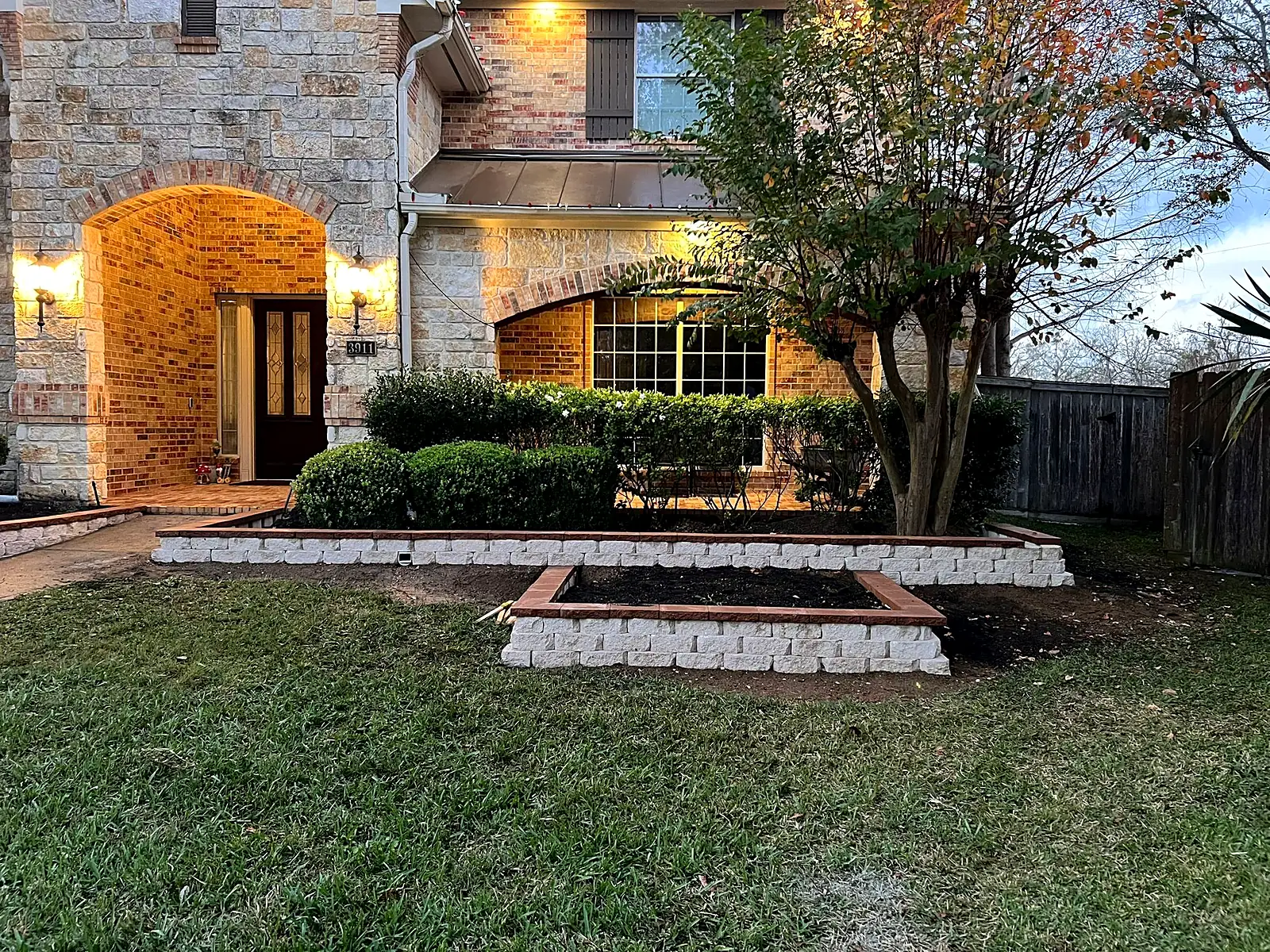
Stone masonry in Houston is a different job than it is in the Hill Country. Here the stone sits on Expansive clayClay soil that swells when wet and shrinks when dry. Much of the Houston area sits on it, and it affects foundations, paving and drainage design. In practice: Keeping soil moisture around a slab foundation steady, without ponding or bone-dry spells, is part of good drainage design here. that swells after a week of rain and shrinks hard in August, so a column, accent wall, or planter is only as straight as the FootingThe widened base at the bottom of a wall, column or structure that spreads its load into the ground. under it. We build stone features from the ground up: footing first, then the structural core, then the stone face.
Texas Urban Elements builds stone columns, veneered walls, seat walls, planters, and stone-clad structures for homes in Houston, Cypress, Katy, The Woodlands, and the rest of the metro. This page explains how stonework is put together, what drives the cost of doing it properly, and the shortcuts that make stone crack, stain, or pull away from the wall behind it.
What's under it · tap a layer
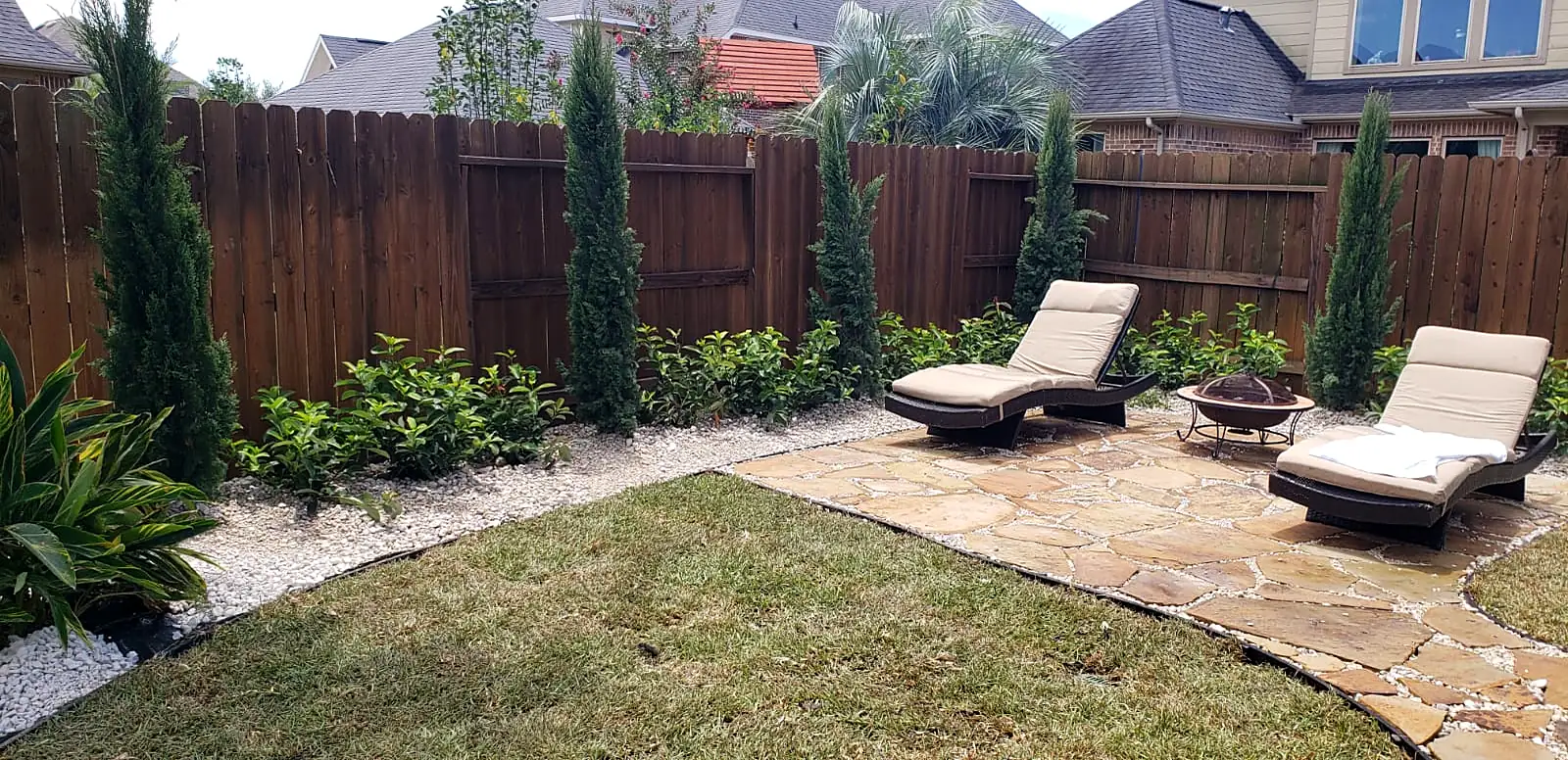
Flagstone. Flat slabs of natural stone, set for patios, walks and wall caps.
01
When Stone Masonry Is the Right Choice
Stone makes sense when you want a feature that reads as permanent: entry columns at the driveway, a seat wall around a fire area, a planter that anchors a patio corner, or cladding over a plain block wall. It also makes sense when a painted or stuccoed surface keeps asking for attention. Well-built stone needs little more than an occasional wash.
It is not the answer for every problem. A wall holding back soil is a structural job for our retaining wall contractor team, built with drainage aggregate and reinforcement a decorative wall lacks. If you mainly need a flat surface, a paver or concrete patio is the better spend.
02
How Stone Masonry Is Built on Houston Clay
Every stone feature has three parts: a footing, a structural core, and the stone face. The footing is reinforced concrete set below the topsoil and sized for the weight above it. On expansive clay, a column or wall on a shallow pad rides up and down with the soil, and stone does not flex. Heavier features get deeper, rebar-reinforced footings so the whole unit moves as one piece, if it moves at all.
The core is usually concrete block (CMU), grouted and reinforced at columns and wall ends. Full-bed stone, roughly 4 inches thick or more, is tied to the core with metal wall ties set in the joints. Thin veneer, around an inch thick, bonds to a mortar scratch coat, with metal lath where needed. Mortar is typically Type S or Type N depending on exposure and load, and joints are tooled at thumbprint hardness so rain sheds off.
Water management finishes the job. Caps overhang the face by about an inch with a drip edge, so rain falls clear of the stone. Planters get a waterproof liner and weep outlets so wet soil does not push moisture through the wall. Grade around the base slopes away, which keeps sprinkler and roof water from wicking into the bottom courses.
03
Our Stone Masonry Process, Step by Step
Stonework goes wrong when it is rushed or designed on the fly. Our process puts decisions up front, where they are cheap to change.
- Site visit: a Home Scout walks the property, checks grade, drainage, utilities, and HOA setbacks, and talks through how the feature will be used.
- Design: dimensions, stone selection, cap profile, and lighting and outlet locations are drawn before pricing, with optional 3D renderings.
- Itemized proposal: footing, core, stone, caps, and drainage are listed separately so you see where the money goes.
- Locates and layout: we call 811, mark the footprint, and confirm sightlines with you on the ground.
- Footing and core: excavate, set rebar, pour, then build and grout the block core with conduit sleeves in place.
- Stone setting: sort stone for color and size, set it in mortar, and tool every joint.
- Caps and walkthrough: set caps, wash the face, and return 72 hours after completion to review the work with you.
04
Stone Options for Houston Homes
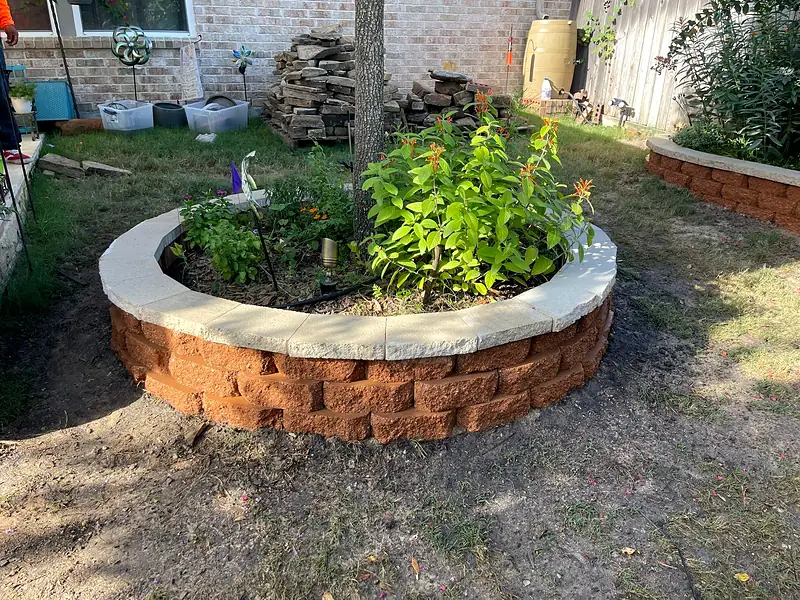
Texas limestone is the most common choice here, in cream, buff, and gray tones, cut as chopped block, sawn ashlar, or split face. Sandstone and FlagstoneFlat, irregular or cut slabs of natural stone used for patios, walks and wall caps. bring warmer reds and browns and work well for caps and seat wall tops. Granite fieldstone suits a rougher, rustic look. Manufactured stone veneer is lighter and more uniform, and it is a practical option on framed walls that cannot carry full-bed stone.
Porous limestones absorb water and can stain under live oak drip, so we often recommend a breathable penetrating sealer on them. We bring samples to the site so you can see them against your brick, siding, and roofline in Houston daylight, not under showroom lights.
05
Stone Masonry Cost Factors in Houston
Stonework is priced by what goes into it, not only the square feet of visible face. Full-bed stone weighs more and takes more labor than thin veneer, and sawn ashlar takes longer to lay than random rubble. Use our ballpark price tool for a starting range, then expect the site visit to refine it.
- Stone type and format: full-bed versus thin veneer, natural versus manufactured
- Footing size and depth, which rise with the weight and height of the feature
- Pattern complexity, outside corners, curves, and custom caps
- Access for stone pallets and equipment, especially through narrow side gates
- Integrated items such as lighting, outlets, gas sleeves, or Water featureAny designed use of water for sight or sound: fountains, pools, runnels, waterfalls or bubbling urns.
- Demolition and haul-off of an existing feature
06
Stone Masonry Mistakes We Fix
Most failed stonework we see in Houston traces back to a short list of shortcuts. Columns built on a shallow pad lean or crack at the base after a dry summer. Thin veneer stuck straight to painted block or plywood with no lath or scratch coat lets go in sheets. Caps set flush with no overhang let water run down the face, leaving white streaks and dark bands at every joint.
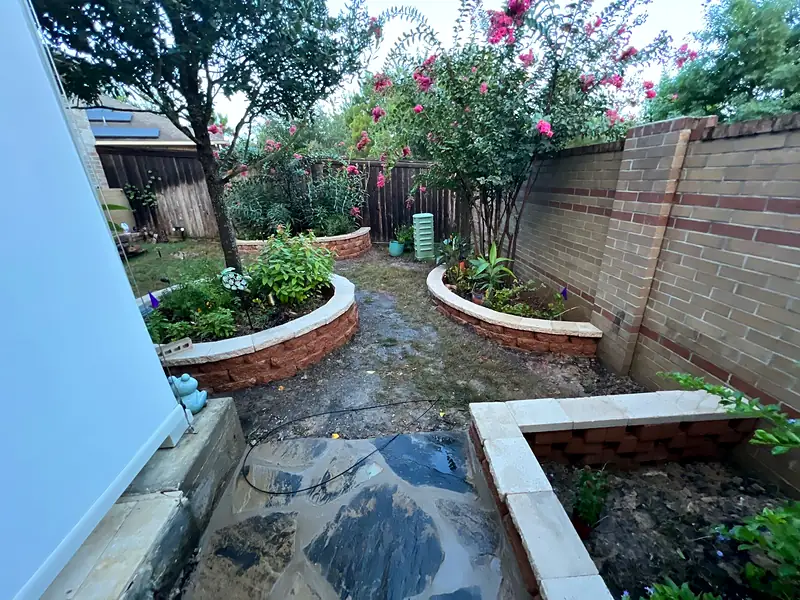
We also find unlined planters pushing soil moisture through the stone. When we rebuild these, we fix the cause, not just the face. If a feature is structurally sound but showing worn joints or loose caps, masonry repair may be a better starting point than a rebuild.
07
What Pairs Well With Stone Masonry
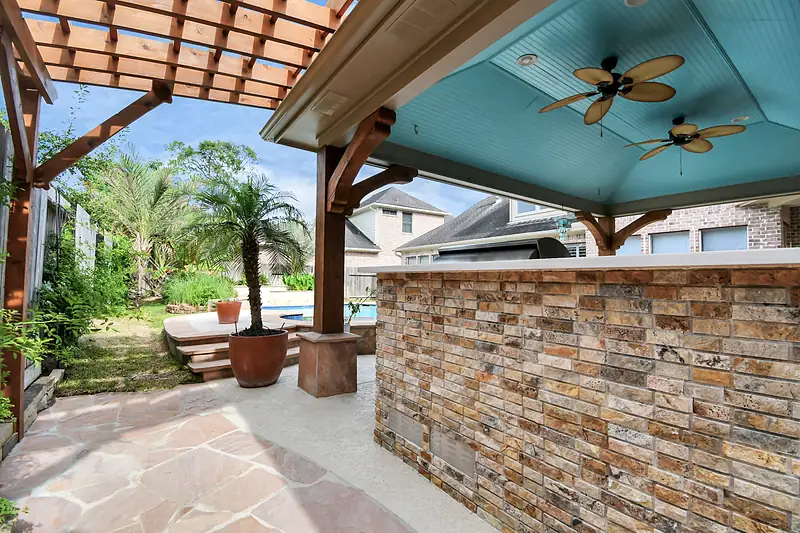
Stone columns and seat walls usually frame something. Many clients pair this work with patio paver installation so the stone and the pavers are built on one shared grade plan. Stone also wraps outdoor kitchen construction islands and fireplace chimneys. Smaller one-off pieces, such as stone steps or a boulder border, fall under our custom stone work.
If you want lighting in caps or washing a column face, we set conduit sleeves before the core goes up.
08
Why Texas Urban Elements for Stonework
We have served Houston since 2016 as a masonry contractor in Houston with one team for every trade. The crew that digs and pours the footing is the crew that sets the stone, so details do not get lost in a hand-off. A Home Scout visits every property before a proposal is written.
Your discovery call is free. The on-site consultation carries a $150 work scope fee that is credited to your project if you move forward. Finished hardscape carries our structural warranty.
Stone Masonry Questions
How long does stone masonry last in Houston?
Properly built stonework can last for decades. The stone itself rarely fails. What fails is the footing, the mortar joints, or the bond to the core. A reinforced footing sized for clay, suitable mortar tooled at the right time, and caps that shed water are what make it last. Look over the joints every few years and repoint small areas as needed.
Is natural stone or manufactured stone veneer better?
Natural stone has more variation, holds its color permanently, and can be laid full-bed for solid features. Manufactured veneer is lighter and more uniform, and works on framed walls that cannot carry real stone. Some manufactured products fade under years of Texas UV. For columns and seat walls on a block core, we usually recommend natural stone.
Do I need a permit for a stone column or wall?
Many small decorative features do not need a building permit, but rules vary. Houston, Bellaire, and West University Place each run their own permit offices, and HOAs often require approval for anything visible from the street. Columns near a property line or EasementA strip of the property that someone else, often a utility or drainage district, has rights to use. Building permanent structures in an easement is usually restricted. In practice: Many Houston lots have a rear utility easement. Check the survey before placing a pergola or outdoor kitchen near the back fence. may need extra review. We check your address during design.
Should stone masonry be sealed?
It depends on the stone. Porous limestone and sandstone under trees or near sprinklers benefit from a breathable penetrating sealer that reduces water absorption without trapping moisture. Dense stones often need nothing. Avoid glossy film-forming coatings on vertical stone, since they can trap vapor in our humidity and peel or cloud. We recommend a specific approach for your stone once it is selected.
Can you add stone veneer to an existing brick or block wall?
Usually, yes. Sound brick or block can take thin veneer after cleaning and a scratch coat, with lath if the surface is painted or smooth. We first confirm the wall is plumb, uncracked, and on a footing that can carry the added weight, because new stone will crack along with a wall that is already moving.
Related Services in Houston
- Custom Stone Work Houston
One-off masonry features: accent walls, garden borders, steps, and focal elements, designed to fit your project.
- Stone Retaining Walls Houston
Natural and manufactured stone walls that hold slopes while adding a finished, permanent look to the landscape.
- Masonry Repair Houston
Repointing, cracked brick and stone, loose caps, efflorescence cleaning, and sealing for outdoor masonry.
- Patio Paver Installation Houston
Paver patios set on a compacted base with proper pitch, edge restraint, and polymeric joint sand.
- Brick Patio Installation Houston
Reclaimed or new brick patios, classic look with the durability to handle Houston heat and freeze cycles.
- Outdoor Fireplace Construction Houston
Custom masonry fireplaces designed and built into your outdoor living area with proper drainage at the base.
Stone Masonry is part of our Masonry Contractor Houston services. Texas Urban Elements is a landscape designer Houston TX that designs and builds every part of the yard.
Need an Assessment?
We assess your yard and provide a permanent solution. Professional project consultation. A Home Scout personally visits every property.
What you get
- A Home Scout on siteA trained scout walks and measures every property before a proposal is written.
- Itemized written proposalPriced line by line, and we price what we quote.
- One team, every tradeNo subcontractor hand-offs between drainage, base and finish.
- 72-hour walkthroughWe come back after completion to check the work with you.
- Backed by guaranteesDrainage Performance Guarantee and a structural warranty on hardscape.
Texas Urban Elements job photos
Stone Masonry jobs in Houston
Photos from our own projects, edited for the web. Tap a thumbnail to see it larger.
Let's Get Started
Don't wait until the problem gets worse. Schedule your professional project consultation today.
For a full overview of masonry contractor options in Houston, see our Masonry Contractor Houston page.